
Tire Pressure, Tread Depth, and Why Both Hit Your Fuel Bill

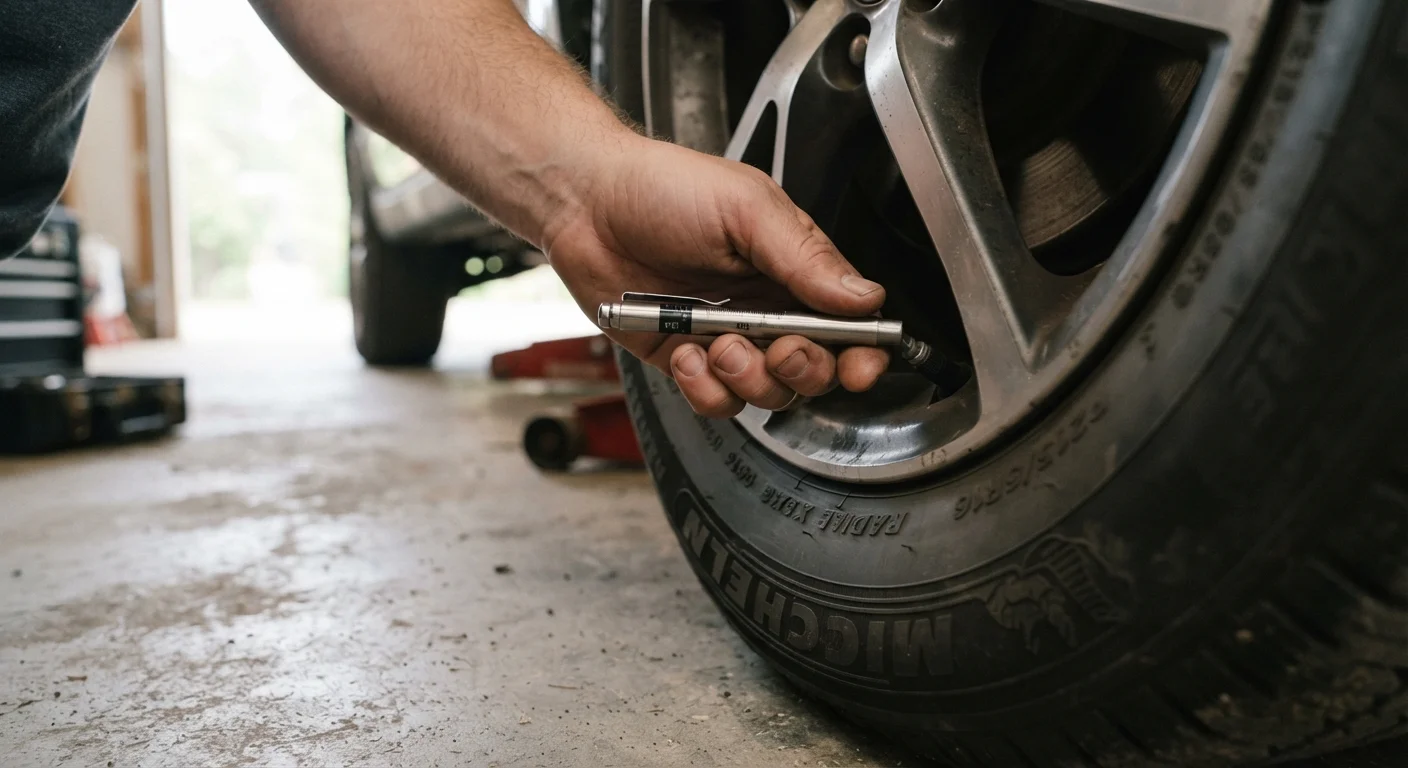
Photo: latesttrend.net editorial
Key Takeaways
- Underinflated tires can reduce fuel economy by roughly 0.2% for every 1 PSI drop across all four tires.
- The correct tire pressure for your car is on the driver's door jamb sticker, not on the tire sidewall.
- Tread depth below 4/32 inch increases rolling resistance and reduces wet-road grip.
- A basic tire pressure gauge costs a few dollars and takes less than two minutes to use.
- Checking pressure monthly and before long trips is enough for most drivers.
- Worn or improperly inflated tires also affect braking distance and handling, not just fuel costs.
How tire pressure drains your gas tank
When a tire is low on air, it flattens slightly at the bottom and flexes more with every rotation. That extra flex generates heat and resistance. Your engine has to push harder to maintain speed, and the fuel cost adds up quietly over thousands of miles.
The U.S. Department of Energy has noted that proper tire inflation can improve fuel economy by up to 3% in some conditions. That figure may sound modest, but on a vehicle covering 15,000 miles per year at $3.50 per gallon, even a 1% to 2% improvement can save a noticeable amount over a year without changing how you drive.
Pressure also changes with temperature. Cold air contracts, so tires that are correctly inflated in summer may be measurably low by January. Many drivers first notice a dashboard warning light in winter, but it helps to check manually before that light appears. See what your dashboard warning lights mean if you want a full breakdown of those alerts.
Check pressure when tires are cold
Check pressure when tires are cold, meaning the car has sat for at least three hours or been driven less than a mile. Heat from driving temporarily raises pressure readings, which can make tires appear fine when they are not.
What tread depth has to do with efficiency
New tires typically start with about 10/32 to 11/32 inch of tread. As rubber wears down, the tire's shape and stiffness change. Studies published in automotive engineering research have found that worn tires can actually reduce rolling resistance on dry pavement in some conditions, but that benefit comes with serious trade-offs in wet-road traction and braking distance. For everyday drivers in mixed conditions, worn tires are a safety risk, not a fuel economy strategy.
For the purposes of fuel cost, the connection is indirect: worn tires often require earlier replacement, which is a larger expense than the modest rolling resistance difference would ever offset. Keeping tires properly inflated slows wear, so the two maintenance habits work together.
Following a consistent maintenance schedule is one of the most straightforward ways to avoid the bigger costs that come from neglected basics.
How to check both in under five minutes
For pressure, you need only a tire pressure gauge, which is available at gas stations and auto parts stores for a few dollars. Remove the valve cap from each tire, press the gauge firmly onto the valve stem, and read the number. Compare it to the PSI listed on your driver's door jamb sticker, not the number printed on the tire itself. Add air at a gas station air pump if needed, and recheck after adding air.
For tread depth, the quarter test works without any tools. Insert a quarter into a tread groove with Washington's head facing down. If you can see the top of his head, the tread is approaching the point where wet-weather performance drops significantly. Check multiple spots across the tire width, since uneven wear can hide in one area while another looks fine.
Both checks take about two minutes combined. Pairing them with another monthly habit, such as checking your fluids under the hood, keeps the whole routine short and consistent.
~0.2%
Fuel economy loss per PSI underinflation
The U.S. Department of Energy cites this figure as the approximate efficiency penalty for each PSI of underinflation across all four tires.
Up to 3%
Potential fuel economy gain from proper inflation
The U.S. Department of Energy notes that keeping tires properly inflated can improve fuel economy by up to 3% compared to running consistently low.
4/32"
Tread depth where wet-road grip drops noticeably
Automotive safety organizations generally treat 4/32 inch as the threshold at which wet-weather braking performance begins to decline meaningfully.
1 PSI
Pressure drop per 10 degrees Fahrenheit temperature fall
This is a well-established physics relationship: air contracts in cold weather, reducing tire pressure without any leak or damage.
Other fuel habits that work alongside tire maintenance
Tire maintenance alone will not transform your fuel economy, but it works in combination with other low-cost habits. Smooth acceleration and coasting to stops instead of braking hard both reduce fuel consumption. Gas-saving driving habits that cost nothing covers those techniques in detail.
It is also worth questioning common maintenance beliefs before spending money on them. Some widely repeated car care advice turns out to be inaccurate and can lead drivers to pay for services they do not need. Starting with the free checks, pressure and tread, before moving to any paid service is a practical order of operations.
Frequently Asked Questions
The content provided on our blog site traverses numerous categories, offering readers valuable and practical information. Readers can use the editorial team’s research and data to gain more insights into their topics of interest. However, they are requested not to treat the articles as conclusive. The website team cannot be held responsible for differences in data or inaccuracies found across other platforms. Please also note that the site might also miss out on various schemes and offers available that the readers may find more beneficial than the ones we cover.