
Common Car Repair Myths That End Up Costing Drivers More Money

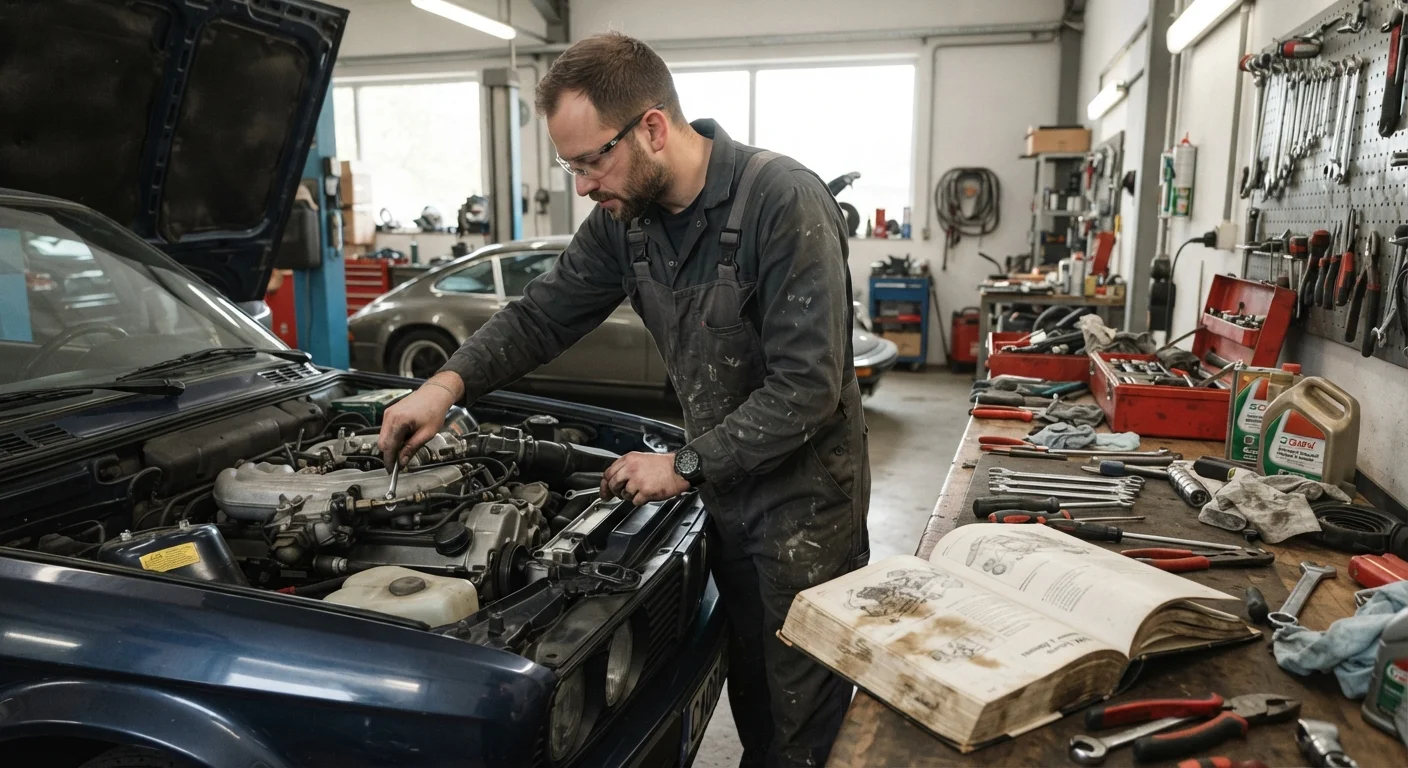
Photo: latesttrend.net editorial
Key Takeaways
- Most cars built after 2010 do not need an oil change every 3,000 miles.
- Premium fuel does not help engines that are not designed to require it.
- Warming up a modern engine by idling wastes gas and provides no real benefit.
- Aftermarket parts can meet or exceed OEM quality for many common repairs.
- Your owner's manual, not shop floor advice, sets the authoritative maintenance schedule.
Why car repair myths survive
Automotive advice travels fast and sticks around long after it stops being accurate. Some of it was sound guidance for carbureted engines built in the 1970s. Some of it has always been wrong. The problem is that outdated or incorrect advice often leads to spending money on services or products that the car does not need, and occasionally it leads to skipping something that actually matters.
The myths below show up in service waiting rooms, social media, and well-meaning family advice. Each one has a measurable cost if you act on it without checking the facts first. For a broader look at how scheduled maintenance protects your budget, see how sticking to your maintenance schedule pays off.
Myth
You need to change your oil every 3,000 miles, no matter what.
Fact
Most modern vehicles with conventional oil are rated for 5,000 to 7,500-mile intervals, and those using full synthetic oil often go 10,000 miles or more between changes.
The 3,000-mile rule was a reasonable guideline for older engine technology and lower-quality motor oils. Contemporary engines use tighter tolerances, and synthetic and synthetic-blend oils degrade more slowly than the conventional oils common in earlier decades. The California Department of Resources Recycling and Recovery has noted that following shorter-than-necessary intervals generates millions of gallons of used oil per year that did not need to be changed. Check the interval printed in your owner's manual, not the sticker a quick-lube shop places on your windshield.
Myth
Premium gasoline gives any car better performance and fuel economy.
Fact
Premium fuel only benefits engines specifically calibrated to require or recommend it. Putting it in a standard engine produces no measurable gain.
Higher-octane fuel resists engine knock at high compression ratios. Engines that require premium are tuned to take advantage of that property. Engines designed for regular-grade fuel have knock sensors that adjust timing to prevent knock regardless, so the extra octane goes unused. The U.S. Department of Energy has confirmed that using premium in a car that calls for regular typically does not improve fuel economy or power output. Look at the fuel door or the owner's manual for the actual requirement, which is either "required" or "recommended." Only the "required" designation means you risk engine damage by using regular.
Myth
You should let your car idle for several minutes to warm it up before driving.
Fact
Modern fuel-injected engines reach operating temperature faster by driving gently than by idling at rest.
Extended idling made sense for carbureted engines, which needed time to deliver the right fuel-air mixture in cold temperatures. Electronic fuel injection systems adjust automatically. Idling for more than about 30 seconds on a cold start wastes fuel, adds wear to cylinder walls because the engine runs rich at low temperatures, and produces emissions with no useful work output. The U.S. Department of Energy recommends driving gently for the first few minutes instead. The engine warms up faster under light load, and the transmission, wheel bearings, and tires also reach operating temperature only when the vehicle is moving.
Myth
Aftermarket parts are always inferior to original equipment manufacturer (OEM) parts.
Fact
Many aftermarket parts meet or exceed OEM specifications, and some are manufactured in the same facilities that supply automakers.
OEM parts carry the automaker's name and a premium price. Aftermarket parts vary in quality, and that variation is real, but the category is not uniformly inferior. Organizations such as the Automotive Aftermarket Suppliers Association note that reputable aftermarket suppliers follow the same engineering standards applied to OEM production. For high-wear items like brake pads, filters, and belts, a name-brand aftermarket part from a recognizable supplier often performs comparably to OEM at a lower cost. Where OEM parts genuinely matter more is in safety-critical or electronically integrated components, such as airbag modules or transmission control units, where exact fit and calibration are harder to replicate. Understanding OEM versus aftermarket on a repair estimate can help you decide which line items are worth the OEM premium.
Myth
If the check engine light comes on, the car needs immediate major repairs.
Fact
The check engine light covers a wide range of fault codes, many of them minor, though it should always be diagnosed promptly.
The onboard diagnostics system triggers the check engine light for hundreds of possible fault codes. A loose gas cap is one of the most common triggers and costs nothing to fix. Oxygen sensor faults, evaporative emission system leaks, and misfires on a single cylinder are other frequent causes that range from inexpensive to moderately priced. Ignoring the light entirely is the mistake to avoid, because a minor fault left unaddressed can cause secondary damage that is genuinely expensive. A flashing check engine light is a different matter and does indicate an active misfire that can damage the catalytic converter; that warrants pulling over and seeking service promptly.
How to stop paying for services you do not need
The most reliable source for your car's actual maintenance needs is the owner's manual in the glove box. It lists the manufacturer's tested intervals for oil changes, transmission fluid, coolant, spark plugs, and every other scheduled item. That interval accounts for the engine design, the recommended oil grade, and normal versus severe driving conditions.
Severe driving, which the manual defines precisely, usually means frequent short trips under five miles, sustained towing, or operation in extreme dust or cold. If those conditions apply to you, shorter intervals may be justified. If they do not, the standard interval is the one to follow.
When you receive a repair estimate, reading it critically also saves money. Decoding what each line item on an auto repair estimate means helps you spot charges for services you have already completed or do not currently need. Separately, knowing which tasks you can handle at home versus which require a shop prevents both unnecessary shop visits and costly DIY mistakes. A frank breakdown of DIY car care versus professional shop work walks through where that line generally falls.
Tire condition is another area where myths circulate. Drivers sometimes assume tires are fine as long as the vehicle handles normally, but pressure and tread depth affect fuel economy before handling noticeably changes. How tire pressure and tread depth affect your fuel bill explains what to measure and how often.
The content provided on our blog site traverses numerous categories, offering readers valuable and practical information. Readers can use the editorial team’s research and data to gain more insights into their topics of interest. However, they are requested not to treat the articles as conclusive. The website team cannot be held responsible for differences in data or inaccuracies found across other platforms. Please also note that the site might also miss out on various schemes and offers available that the readers may find more beneficial than the ones we cover.