
Why Your Car's Maintenance Schedule Is the Cheapest Insurance You Own

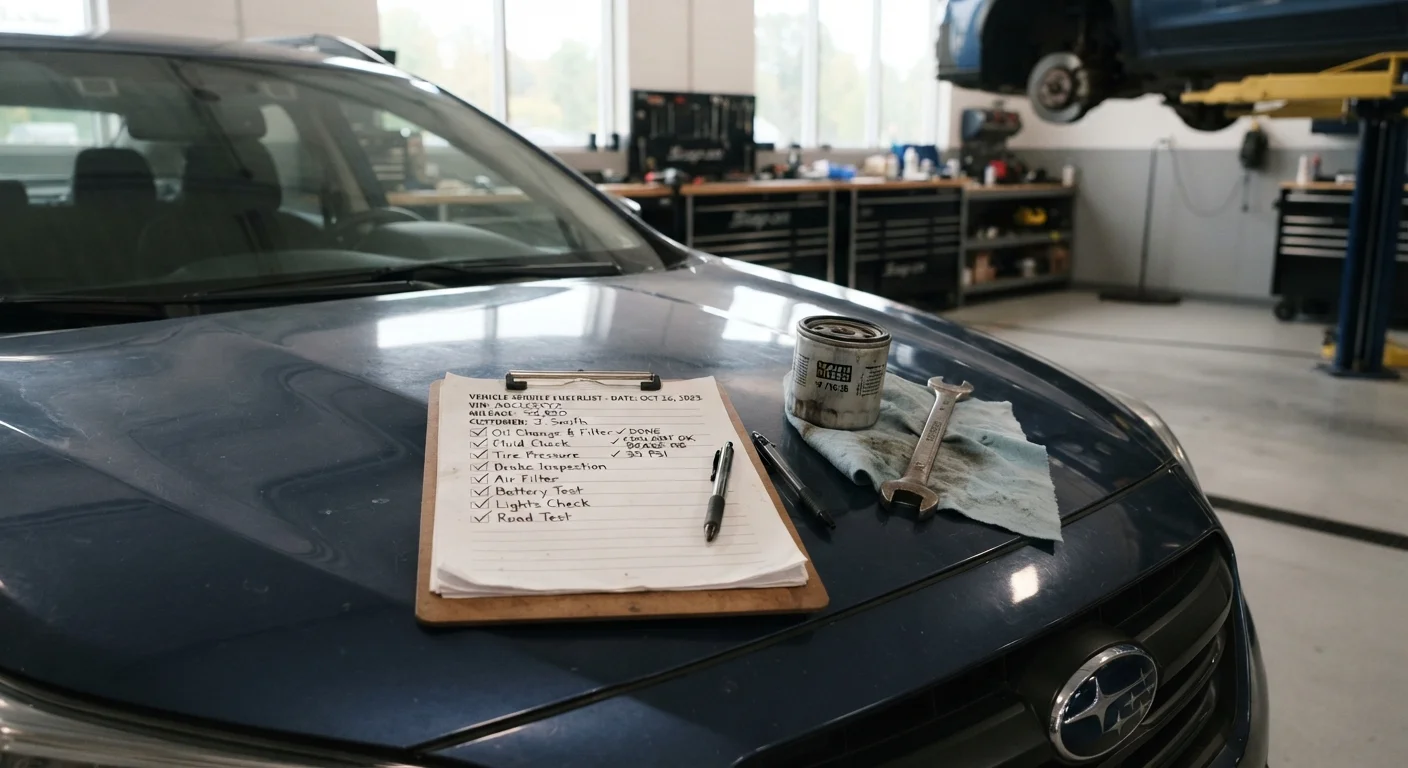
Photo: latesttrend.net editorial
Key Takeaways
- Routine maintenance costs a fraction of what most major repairs run.
- Skipping oil changes is one of the fastest ways to shorten an engine's lifespan.
- Your owner's manual is the most reliable source for your car's actual service intervals.
- Many maintenance tasks can be done at home to reduce labor costs.
- Keeping service records supports resale value and warranty claims.
What the maintenance schedule actually covers
The owner's manual for your car lists every scheduled service task alongside the mileage or time interval at which it should happen. Common items include engine oil and filter changes, tire rotations, air filter replacements, spark plug inspections, brake fluid checks, coolant flushes, and transmission fluid changes. Each task has an interval because the part or fluid involved degrades at a predictable rate under normal use.
These intervals are not arbitrary. Manufacturers determine them through testing under real operating conditions. An oil filter, for example, has a finite capacity to trap contaminants before it restricts flow. A timing belt has a tensile limit that degrades with heat cycles. The schedule reflects those physical limits.
If you bought a used car and have no maintenance history, setting a baseline before problems surface is worth doing early. Establishing a maintenance baseline on a used vehicle walks through how to assess where your car stands.
The real cost of skipping service
Routine maintenance tasks are inexpensive compared to the repairs that follow when they are neglected. An oil change at a quick-lube shop typically runs $40 to $80 depending on oil type and location. Engine repairs caused by sludge buildup or oil starvation can run $1,000 to over $4,000. A new timing belt service costs roughly $300 to $700 on most vehicles. A snapped belt that damages the engine can push repair costs past $2,500 and sometimes makes the car a total loss.
Tires are another example. Regular rotations, which usually cost $20 to $50, even out tread wear across all four tires. Skipping them can cause uneven wear that requires premature replacement of two or more tires, adding hundreds of dollars in unplanned spending.
$1,000+
Typical engine repair from oil neglect
Minor engine repairs from sludge or oil starvation commonly start above $1,000 at U.S. repair shops, far exceeding the cost of regular oil changes.
$40-$80
Average oil change cost
A conventional or synthetic oil change at a U.S. quick-lube shop typically falls in this range, depending on oil type and location.
$2,500+
Engine damage from a snapped timing belt
On interference engines, a broken timing belt can cause piston and valve damage, with repair estimates that often exceed $2,500 at U.S. shops.
The pattern across nearly every maintenance item is the same: a small, predictable expense now prevents a larger, unpredictable one later. That is the core logic of treating the schedule as a budget tool rather than an optional checklist.
How to use your owner's manual as a cost control tool
The owner's manual is the most accurate and free resource you have for managing vehicle costs. It tells you exactly what your car needs and when, without upselling you on services your vehicle does not require. This matters because some service providers recommend intervals shorter than what the manufacturer specifies, which generates more frequent visits and higher bills without a corresponding mechanical benefit.
Cross-referencing the manual with any recommended service gives you a clear basis for accepting or questioning a shop's recommendations. Common car repair myths that cost drivers money covers several widespread misconceptions about service intervals that lead people to spend more than necessary.
If you are unsure whether a task qualifies as DIY or shop work, a frank breakdown of DIY car care versus professional service can help you decide where your time and money are best spent.
Keeping records and protecting your investment
Every service receipt is documentation that the work was done. Those records matter for two reasons. First, they protect your warranty. If a covered component fails and the manufacturer suspects neglect, records showing consistent adherence to the schedule support your claim. Second, they support resale value. A vehicle with a complete paper trail is easier to sell and typically sells for more than the same car without documentation.
A simple folder in your glove box works fine for paper receipts. Digital photos of receipts stored in a folder on your phone or cloud account also work. The habit of saving every receipt costs nothing.
The broader principle here applies beyond cars. The same logic of small, consistent investments preventing large, reactive expenses shows up in home ownership too. Preventive maintenance tasks that head off expensive home repairs covers how the same approach applies to your house.
Frequently Asked Questions
The content provided on our blog site traverses numerous categories, offering readers valuable and practical information. Readers can use the editorial team’s research and data to gain more insights into their topics of interest. However, they are requested not to treat the articles as conclusive. The website team cannot be held responsible for differences in data or inaccuracies found across other platforms. Please also note that the site might also miss out on various schemes and offers available that the readers may find more beneficial than the ones we cover.