
Checking Your Own Fluids: A Practical Under-the-Hood Walkthrough

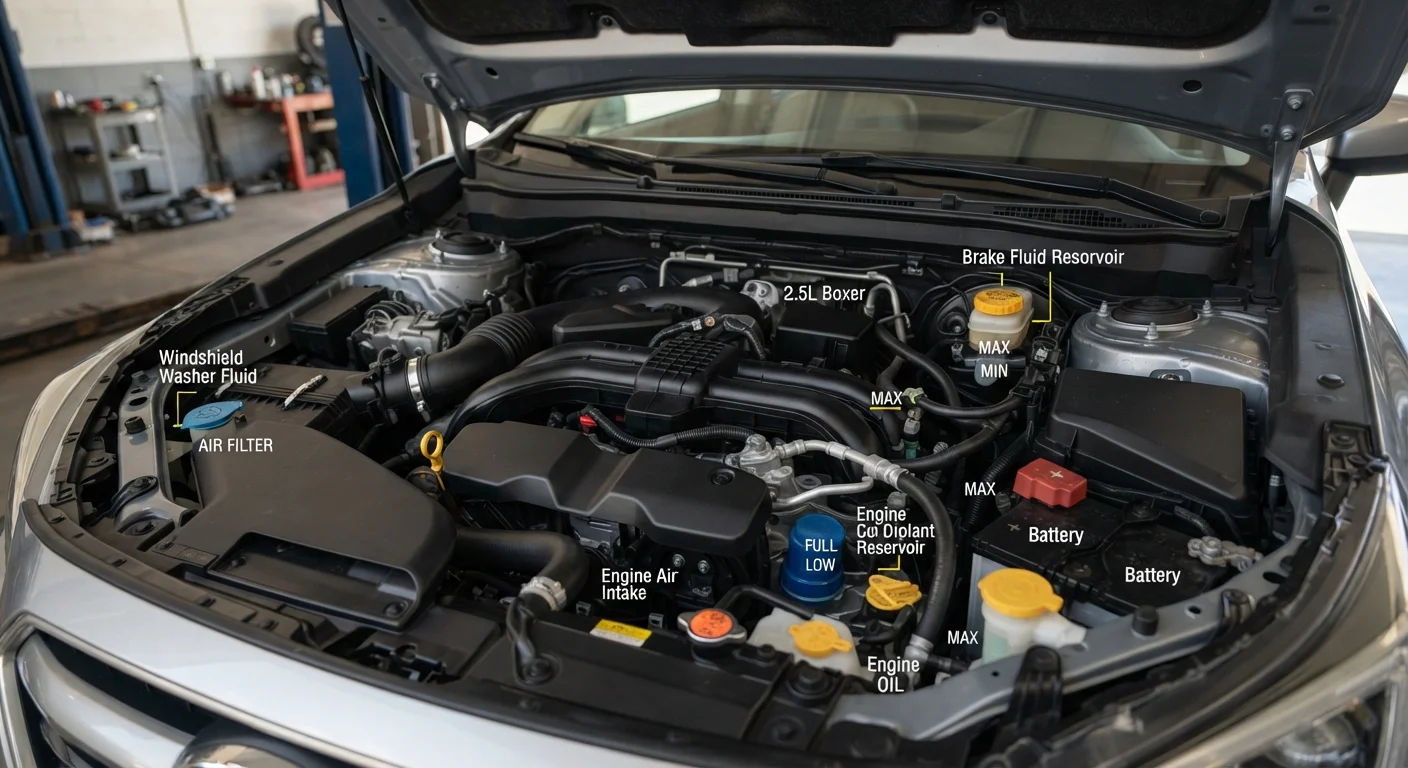
Photo: latesttrend.net editorial
Key Takeaways
- Checking five key fluids takes under 20 minutes and can prevent expensive repairs.
- Always check fluids on a level surface with the engine cool unless the manual says otherwise.
- Low or discolored fluid is often the first sign of a developing problem.
- Your owner's manual is the most reliable guide for intervals and fluid specifications.
- Some fluid issues signal that a qualified mechanic should inspect the vehicle.
Why checking fluids yourself matters
Fluids are the most overlooked part of routine vehicle care, and also among the cheapest to address when caught early. A quart of oil costs a few dollars; an engine seized from running dry can cost thousands. The same math applies to coolant, brake fluid, power steering fluid, and transmission fluid.
You do not need mechanical training to do these checks. What you need is a basic process, a clean rag, and about 15 minutes. Catching a slow leak or gradual contamination early is one of the most concrete ways to reduce what you spend on your vehicle over time.
For a broader look at maintaining a vehicle you did not buy new, see our maintenance baseline guide for used car owners, which covers how to assess what your car actually needs before problems surface.
What you will need
Before you open the hood
Park on a flat, level surface. An inclined driveway will give you a false reading on the dipstick. Turn the engine off and wait at least five minutes before touching anything. Some checks, like the radiator overflow reservoir, can be read cold. Others, like oil, are more accurate after a short warm-up followed by a few minutes of rest so the oil drains back into the pan.
Locate your owner's manual before you start. Every car labels its fluid reservoirs differently, and the manual will show you exactly where each one sits in your engine bay. It also tells you which fluid type and grade your vehicle requires, which matters when you need to top something off.
If your check-engine or oil pressure light is already on, do not assume a top-off will fix it. See our guide to dashboard warning lights to understand what the light is actually signaling before you decide on a course of action.
The five fluids to check and how to check them
Check the engine oil
Locate the oil dipstick, which typically has a brightly colored handle (yellow or orange on most vehicles). Pull it out fully and wipe it clean with a rag. Reinsert it all the way, then pull it out again and hold it flat so you can read the level.
The dipstick has two marks: a low mark and a full mark. The oil film should sit between them. Also look at the oil's color. Fresh oil is amber-brown. Dark brown or black oil is due for a change. Oil that looks gray or milky suggests water or coolant contamination, which requires professional diagnosis.
Check the coolant level
Do not open the radiator cap on a hot engine. Instead, check the translucent overflow reservoir connected to the radiator by a hose. It has min and max lines on the side. The coolant level should fall between them.
Coolant is typically green, orange, or pink depending on the type your vehicle uses. If the reservoir is empty or the coolant looks rusty or oily, do not simply refill it and move on. Have a mechanic check for leaks or contamination.
Check the brake fluid
The brake fluid reservoir is usually a small, semi-transparent plastic container near the back of the engine bay on the driver's side. Most have a min/max marking you can read without opening the cap. The fluid should be within the marked range and appear light yellow to clear.
Brake fluid absorbs moisture over time, which lowers its boiling point and reduces braking effectiveness. Very dark or murky fluid is worth mentioning to a mechanic at your next service appointment.
Check the power steering fluid
Not all vehicles have a power steering fluid reservoir. Many newer cars use electric power steering, which has no fluid. If your car has hydraulic power steering, the reservoir is usually labeled and located near the front of the engine bay. Some have a dipstick attached to the cap; others have min/max lines on the reservoir wall.
The fluid should be in the normal range and appear clear to light red or pink, depending on the type. A whining noise when you turn the wheel is a common sign that this fluid is low.
Check the windshield washer fluid
The washer fluid reservoir is the one fluid you can top off freely without concern about damaging the vehicle. It is typically a large translucent reservoir with a washer icon on the cap. Fill it with washer fluid rated for the temperatures in your region. Plain water can freeze in cold weather and does not clean as effectively.
This is a low-stakes check, but an empty reservoir on a long winter drive can become a safety issue if your windshield gets road spray and you cannot clear it.
Fluid checks are not a substitute for scheduled service. If any fluid is consistently low between checks, or if you find contamination (milky oil, rust in the coolant, dark gritty brake fluid), have a qualified mechanic inspect the vehicle. Those symptoms point to underlying issues a top-off will not fix.
Temperature swings affect fluid condition and levels. Our seasonal car prep article covers how to adjust your inspection routine when the weather changes significantly.
Knowing when to stop and call a mechanic
Fluid checks are a diagnostic tool, not a repair. They tell you whether something needs attention, not why it happened. Some findings are clear signals to get professional help rather than proceed on your own.
Stop and consult a mechanic if you find oil that looks milky or foamy (possible coolant intrusion), coolant that is rust-colored or has an oily film, brake fluid that has dropped noticeably since the last check, or any fluid with visible debris. These findings point to internal problems that topping off the reservoir will not resolve.
For a practical breakdown of which maintenance tasks genuinely save money at home versus which ones carry real risk of making things worse, see our DIY vs. shop comparison.
While you have the hood open, it is also worth glancing at your tires. Fluid economy and tire condition affect your fuel costs together. Our tire pressure and tread depth guide explains what to look for and how often to check it.
The content provided on our blog site traverses numerous categories, offering readers valuable and practical information. Readers can use the editorial team’s research and data to gain more insights into their topics of interest. However, they are requested not to treat the articles as conclusive. The website team cannot be held responsible for differences in data or inaccuracies found across other platforms. Please also note that the site might also miss out on various schemes and offers available that the readers may find more beneficial than the ones we cover.