
DIY Car Care vs. Taking It to a Shop: Knowing Where the Line Is

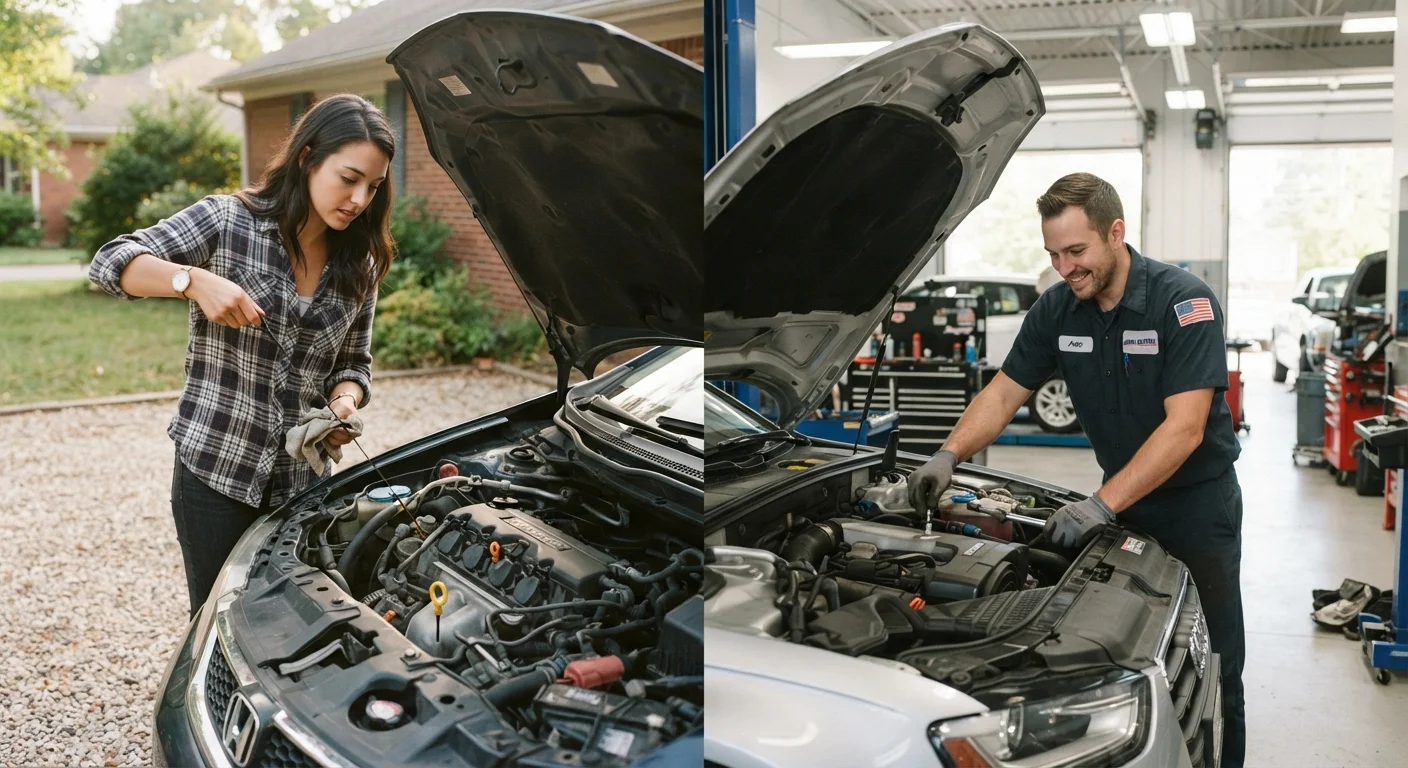
Photo: latesttrend.net editorial
Key Takeaways
- Simple fluid checks, air filters, and wiper blades are tasks most drivers can handle at home with minimal tools.
- Brake work, suspension repairs, and anything involving the fuel or electrical system generally require professional equipment and training.
- DIY saves money on labor but can cost more overall if a mistake leads to additional damage or a failed inspection.
- Knowing your own skill level honestly is as important as knowing the task itself.
- Sticking to a maintenance schedule, regardless of who does the work, is the most reliable way to avoid large repair bills.
Cuts labor costs on simple, routine maintenance
Tasks like air filter swaps, wiper replacements, and fluid top-offs carry little labor risk. Avoiding shop labor rates on these jobs can save $30 to $80 per visit.
Builds familiarity with your own vehicle
Doing basic checks yourself means you notice changes in fluid color, belt condition, or tire wear earlier. Early detection reduces the chance a small issue becomes an expensive one.
Flexible scheduling on your own time
Home maintenance does not require an appointment or time off work. For households with one car, avoiding a half-day shop visit has real practical value.
Tools purchased once apply to future jobs
A basic tool set pays for itself over several DIY jobs. Families who own multiple vehicles see the payback faster.
Mistakes on safety systems can be dangerous
Brake, suspension, and steering components directly affect vehicle control. An improperly completed repair on these systems can create a safety risk that is not immediately obvious.
Upfront tool costs offset savings on first jobs
Jacks, stands, a torque wrench, and specialty sockets can add $150 to $400 before parts. For infrequent repairs, a shop may cost less overall.
DIY errors can void warranty coverage
Improper repairs or non-approved parts can affect powertrain or component warranty claims, depending on the vehicle's coverage terms and the nature of the work.
Diagnosis without proper tools often misses the root cause
Reading a generic OBD-II code does not tell you which component has failed. Replacing parts based on a code alone without further testing frequently leads to repeated repairs.
What DIY car care actually covers
Home car maintenance is not a single category. It ranges from wiping a dipstick to replacing brake pads, and the gap in skill, tools, and risk between those two tasks is significant. When people talk about saving money by doing it themselves, they are usually talking about a narrow band of routine jobs: checking and topping off fluids, replacing air filters (engine and cabin), swapping wiper blades, changing a battery, and basic detailing. These tasks require few or no specialty tools, the parts are inexpensive and widely available, and a mistake is easy to catch before it causes harm.
Fluid checks are a good example. With basic familiarity with what you are looking at, you can monitor oil level and color, coolant level, brake fluid level, and windshield washer fluid in under ten minutes. The under-hood fluid walkthrough covers exactly what to look for. None of that requires a shop visit.
An engine air filter swap takes about five minutes on most vehicles and the part typically costs $15 to $30. A shop might charge $40 to $70 for the same job once labor is added. That spread is where DIY delivers real savings.
Where DIY stops saving money
The calculus changes fast when a job involves safety systems or requires diagnostic equipment. Brake pad replacement sits in a gray zone: an experienced home mechanic with the right tools can do it, but the job requires compressing the caliper piston, torquing hardware to spec, and verifying the system bleeds correctly. A missed step can reduce stopping power. For most drivers without prior brake experience, a shop is the safer and often cheaper long-term choice when you factor in the cost of a mistake.
Suspension components, wheel bearings, timing belts or chains, fuel system parts, and anything touching the airbag or ABS systems should go to a qualified mechanic. These jobs require specialized tools, precise torque specifications, and in some cases a scan tool to reset codes or calibrate sensors after the repair. Doing them wrong does not just mean the repair fails; it can create a new, larger problem.
When a warning light appears
Electrical diagnosis is another area where home attempts frequently turn into expensive shop visits anyway. Chasing a fault code without proper diagnostic software often leads to replacing parts that are not the root cause. If a warning light is on and the cause is not obvious, a professional diagnosis upfront usually costs less than a series of wrong guesses.
The real cost comparison
Labor is the biggest driver of shop costs. Rates vary widely by region, but national averages for independent shops run roughly $80 to $120 per hour. Dealership rates often run higher. That means a one-hour job that costs $25 in parts might cost $100 to $145 at a shop. For straightforward maintenance, the DIY savings are real.
However, parts markup at a shop is often lower than you would expect if you buy parts retail. Shops get trade pricing. And when you factor in tool purchases, a first-time DIY job can cost more than having a shop do it. A basic socket set and torque wrench cost $50 to $150; a jack and jack stands add another $80 to $200. Those costs amortize over time, but they matter for the first few jobs. The tool rental versus tool ownership comparison applies directly here: if you will only do a job once, renting a specialty tool is usually smarter than buying it.
$80-$120
Typical independent shop hourly labor rate
National averages for independent repair shops; dealership rates are generally higher, according to industry surveys from AAA.
$15-$30
Average retail cost of an engine air filter
Compared to $40 to $70 when purchased and installed at a shop, based on common retail and service pricing reported by consumer auto resources.
When you read a shop estimate, understanding what each line item represents helps you decide whether a repair is worth doing yourself or whether the labor cost is justified. The repair estimate breakdown explains how shops structure charges so you can compare accurately.
Pros and cons in practice
Cuts labor costs on simple, routine maintenance
Tasks like air filter swaps, wiper replacements, and fluid top-offs carry little labor risk. Avoiding shop labor rates on these jobs can save $30 to $80 per visit.
Builds familiarity with your own vehicle
Doing basic checks yourself means you notice changes in fluid color, belt condition, or tire wear earlier. Early detection reduces the chance a small issue becomes an expensive one.
Flexible scheduling on your own time
Home maintenance does not require an appointment or time off work. For households with one car, avoiding a half-day shop visit has real practical value.
Tools purchased once apply to future jobs
A basic tool set pays for itself over several DIY jobs. Families who own multiple vehicles see the payback faster.
Mistakes on safety systems can be dangerous
Brake, suspension, and steering components directly affect vehicle control. An improperly completed repair on these systems can create a safety risk that is not immediately obvious.
Upfront tool costs offset savings on first jobs
Jacks, stands, a torque wrench, and specialty sockets can add $150 to $400 before parts. For infrequent repairs, a shop may cost less overall.
DIY errors can void warranty coverage
Improper repairs or non-approved parts can affect powertrain or component warranty claims, depending on the vehicle's coverage terms and the nature of the work.
Diagnosis without proper tools often misses the root cause
Reading a generic OBD-II code does not tell you which component has failed. Replacing parts based on a code alone without further testing frequently leads to repeated repairs.
The financial case for DIY holds when the task is genuinely within your skill level, the parts are accessible, and the consequences of an error are minor and easy to detect. It weakens whenever any of those conditions is absent. A consistent maintenance schedule matters more than who performs each task; a skipped service that leads to engine damage will cost far more than any labor rate.
The car repair myths that cost drivers money article is worth reading alongside this one, since several popular DIY beliefs, particularly around oil change intervals and fluid compatibility, turn out to be incorrect and occasionally harmful to the vehicle.
The content provided on our blog site traverses numerous categories, offering readers valuable and practical information. Readers can use the editorial team’s research and data to gain more insights into their topics of interest. However, they are requested not to treat the articles as conclusive. The website team cannot be held responsible for differences in data or inaccuracies found across other platforms. Please also note that the site might also miss out on various schemes and offers available that the readers may find more beneficial than the ones we cover.