
Decoding a Repair Estimate: What Those Line Items Actually Mean

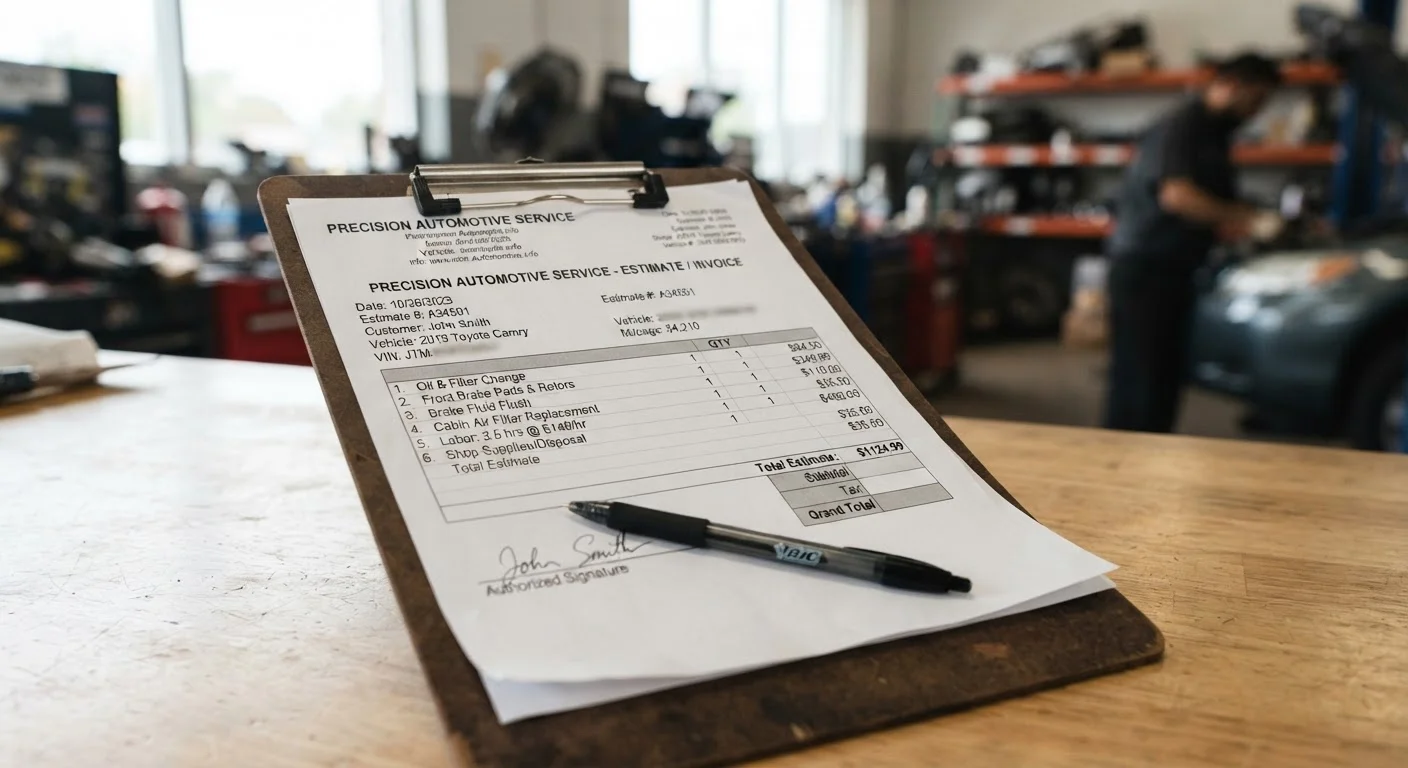
Photo: latesttrend.net editorial
The three main sections on any repair estimate
Most repair estimates follow a standard format with three cost categories: parts, labor, and fees. Knowing what each one covers lets you spot charges that need clarification before you approve any work.
Labor hour
A billing unit for repair time set by industry-standard time guides, not actual clock time. Your total labor charge equals the shop's hourly rate multiplied by the number of assigned labor hours for your specific repair.
OEM part
Original Equipment Manufacturer part. Made to the same specifications as the parts installed when the vehicle was built. Usually costs more than aftermarket alternatives.
Aftermarket part
A replacement component made by a company other than the original vehicle manufacturer. Quality and price vary widely across suppliers.
Remanufactured part
A used part that has been disassembled, inspected, and rebuilt to meet performance standards. Common for starters, alternators, and brake calipers, and typically includes a warranty.
Flat rate
The industry billing method where labor cost is calculated from a standardized time guide rather than actual hours worked. The price is fixed to the assigned time value, not the technician's speed.
Shop supply fee
A line-item charge covering consumables used during the repair, such as lubricants, rags, and fasteners. This fee is separate from parts and labor and is often a flat percentage of the total.
Parts covers everything physically installed on your vehicle. You will typically see either a part number, a description, or both. The price shown is what the shop charges you, not necessarily what the shop paid. Shops mark up parts, sometimes by 20 to 50 percent, which is standard practice and not inherently deceptive. The question worth asking is whether you are being charged for an OEM part, an aftermarket part, or a remanufactured one, because their prices differ significantly.
Labor is calculated by multiplying a flat rate (the shop's hourly rate) by a standard time unit called a "labor hour." Labor hours are pulled from industry-standard time guides, not from a stopwatch on your actual repair. A job listed as 2.5 labor hours at $120 per hour costs $300 in labor whether the technician finishes in 90 minutes or takes all afternoon. This is normal, but it means two shops can charge different amounts for identical work if their hourly rates differ.
Fees and miscellaneous charges sit below parts and labor and are easy to miss. They include hazardous material disposal, shop supply fees, and sometimes environmental charges. These can add $15 to $75 or more to a total. They are also negotiable in some shops, particularly if the job is straightforward and used few consumables.
OEM, aftermarket, and remanufactured: what the part type tells you
The part type affects both price and performance, so it belongs on your checklist when reviewing an estimate.
| Typical shop parts markup | 20% to 50% above wholesale cost |
| Common labor rate range (independent shops) | $80 to $130 per hour (Varies significantly by region and shop type) |
| Common labor rate range (dealerships) | $120 to $180+ per hour (Varies by brand and location) |
| Typical warranty on shop repairs | 12 months or 12,000 miles (Terms vary; confirm in writing before authorizing work) |
| State-required authorization threshold | Commonly $10 to $50 or 10% above estimate (Rules differ by state; check your state's consumer protection office) |
OEM parts come from the vehicle's original manufacturer or an approved supplier and are built to factory specifications. They typically cost more. Aftermarket parts are made by independent suppliers and vary in quality. Some aftermarket parts match or exceed OEM durability; others fall short. Remanufactured (or "reman") parts are used components that have been rebuilt to meet performance standards. They are common for alternators, starters, and brake calipers, and they usually carry a warranty.
An estimate should state which type is being used. If it only says "part" with a price, ask the shop to specify. For safety-critical components such as brake pads or steering parts, that distinction matters. For something like a cabin air filter, it matters far less. See our breakdown of common repair myths for more context on when part quality genuinely affects outcomes.
Labor hours and the flat rate system
The flat rate system is the industry standard for calculating labor costs. A trade database assigns each repair job a time value based on an average of how long the work takes across many vehicles and technicians. The shop multiplies that value by its posted hourly rate.
This system can work in your favor or against you depending on the job. On straightforward repairs where the time guides are accurate, you pay a fair price. On older vehicles where corrosion or prior repairs add time, the actual job may take longer than the guide suggests, and some shops charge for the overage while others absorb it. Ask upfront how the shop handles time overruns: a written estimate should lock in the labor price unless the scope of work changes.
Hourly rates vary considerably by location and shop type. Dealerships often charge more than independent shops, sometimes $50 or more per hour for the same labor. That gap can matter on a large repair. Our article on when to DIY versus going to a shop covers how to decide which option fits your situation.
What to do before you sign
A written estimate is a commitment from the shop to perform the work at a stated price. Most states require shops to get your authorization before exceeding the estimate by more than a set dollar amount (commonly $10 to $50 or 10 percent, depending on the state). Verbal approvals over the phone still count, so keep notes.
Before authorizing work, confirm the following on the estimate: the part type for each item, whether the listed labor hours match a standard guide or are the shop's own estimate, what the shop supply or miscellaneous fees cover, and whether any warranty applies to parts and labor. Reputable shops typically offer at least a 12-month or 12,000-mile warranty on repairs, though terms vary.
Getting a second estimate on repairs over a few hundred dollars is reasonable. The goal is not to find the absolute floor price but to confirm the first estimate is within a normal range. Large gaps between two estimates usually point to a difference in part type, labor rate, or the scope of work being proposed, all of which are worth discussing directly with the shop.
Reading an estimate carefully takes about five minutes and can prevent misunderstandings that cost far more to resolve after the work is done.
The content provided on our blog site traverses numerous categories, offering readers valuable and practical information. Readers can use the editorial team’s research and data to gain more insights into their topics of interest. However, they are requested not to treat the articles as conclusive. The website team cannot be held responsible for differences in data or inaccuracies found across other platforms. Please also note that the site might also miss out on various schemes and offers available that the readers may find more beneficial than the ones we cover.