
Buying in Bulk vs. Shopping Weekly: Which Approach Saves More?

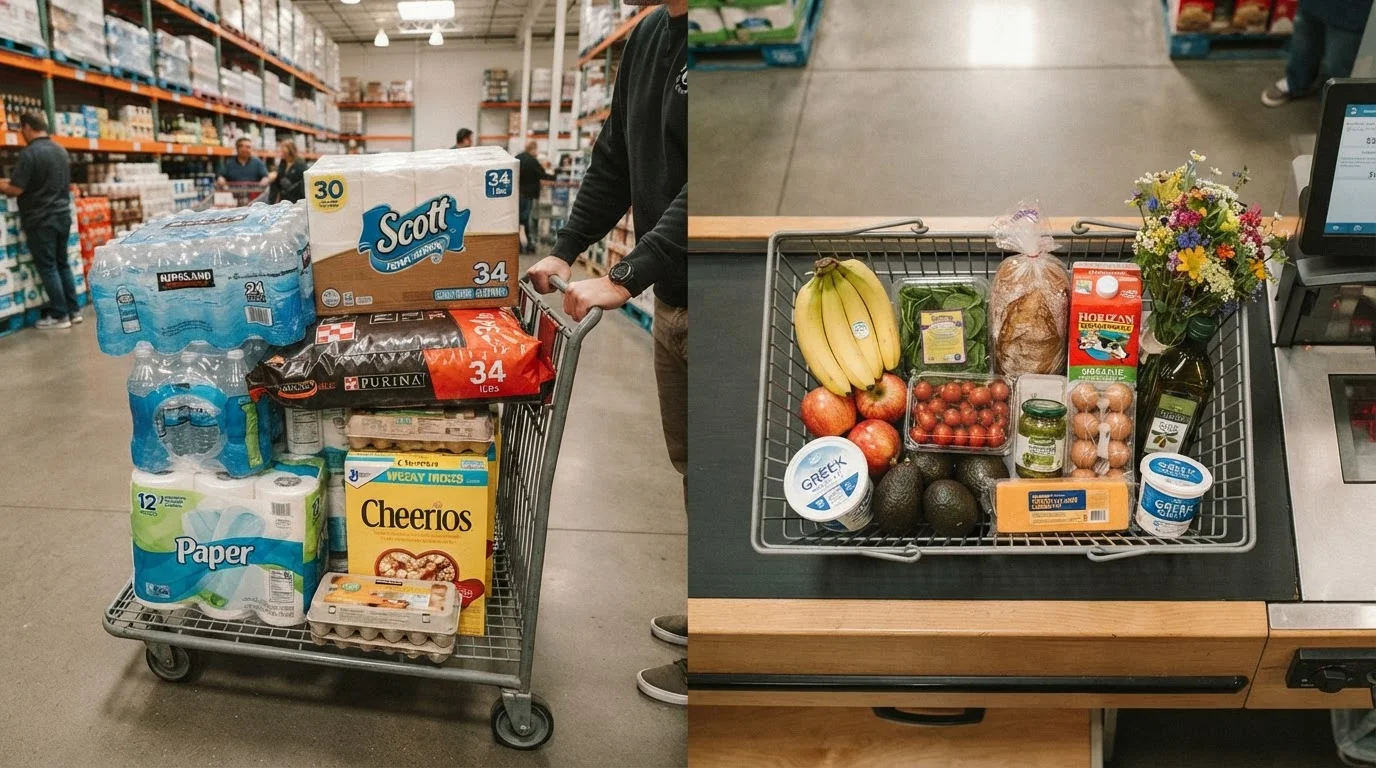
Photo: latesttrend.net editorial
Key Takeaways
- Bulk buying lowers the cost per unit but requires storage space and consistent consumption to avoid waste.
- Weekly shopping gives families more flexibility on fresh foods and avoids the risk of buying things they never finish.
- Membership fees for warehouse clubs can cancel out savings for households that shop there infrequently.
- The better approach depends on household size, storage capacity, and which categories you are comparing.
- A hybrid strategy works for many families: bulk for non-perishables, weekly for fresh and variable items.
What you actually pay, unit by unit
The math on bulk buying is straightforward: the per-unit price is almost always lower than what you pay for smaller packages. A 48-count paper towel roll will typically cost less per roll than a four-pack from a convenience or grocery store. On non-perishables with long shelf lives, such as canned goods, laundry detergent, and cooking oil, that gap is real and repeatable.
The problem is that a lower per-unit price is not the same as spending less money. A warehouse run can easily total $200 to $300, a figure that strains a weekly cash flow even if it works out to savings over time. Families who are managing a tight weekly family budget may find that a large single transaction disrupts their planning more than a series of smaller, predictable ones.
Weekly shopping, by contrast, keeps spending in smaller chunks. The per-item price is higher, but the cash outlay each trip is lower. For households where cash flow matters as much as total cost, that structure can be easier to sustain.
| Criterion | Buying in Bulk | Shopping Weekly |
|---|---|---|
| Cost per unit | Lower on most staples | Higher, especially for convenience packs |
| Upfront cash required | High per trip | Lower per trip |
| Flexibility | Low; committed to what you bought | High; adjust each week |
| Spoilage risk | Higher for perishables | Lower with proper planning |
| Storage needed | Significant | Minimal |
| Best item types | Non-perishables, paper goods | Fresh produce, dairy, variable items |
| Membership cost | Often required ($50-$65/year) | None |
| Impulse spending risk | Moderate (large single buys) | Higher (more frequent trips) |
Where bulk buying loses its edge
Bulk buying stops saving money the moment food goes bad or a product sits unused. Produce bought in warehouse quantities rarely gets fully consumed by households of two or three people before it turns. Specialty sauces, niche snacks, or anything tied to a passing food preference carries the same risk: you buy 64 ounces of something and the family loses interest after the first week.
Storage is a second constraint that often goes unexamined before the purchase. A 40-pound bag of rice needs somewhere to live. If it ends up on the floor of a closet or competing for kitchen cabinet space, the friction it creates has a real cost even if that cost does not show on a receipt.
Membership fees deserve scrutiny too. A warehouse club membership typically runs between $50 and $65 per year. A household that makes only occasional visits, or one that treats the warehouse store as a destination for a few snacks and some gas, may not generate enough per-unit savings to cover that fee. It is worth adding up actual past purchases before renewing.
These are the same trade-offs that come up in other buy-more-upfront decisions, like renting versus buying tools for home projects. Higher upfront cost pays off only when you use the thing often enough to justify it.
Where weekly shopping costs more than it should
Weekly grocery trips carry their own risks. Convenience packaging, such as pre-portioned snacks, individually wrapped servings, and pre-cut produce, adds significant cost per ounce. The true cost of convenience for families is real: a bag of pre-cut carrot sticks can cost two to three times more per pound than a whole bag of carrots.
Frequent trips also expose families to more impulse purchases. Each visit to a grocery store is another opportunity to add items that were not on the list. Over a month, those small additions can add up to a meaningful sum without any single purchase seeming excessive.
~$1,500
Average annual U.S. household food waste cost
The USDA estimates that American households discard a significant share of the food they purchase, with associated costs often estimated around this range depending on household size.
2-3x
Price premium for pre-cut vs. whole produce
Consumer price comparisons across major U.S. grocery chains consistently show pre-portioned and pre-cut produce carries a substantial per-pound premium over whole equivalents.
$50-$65
Typical annual warehouse club membership fee
Major U.S. warehouse club retailers generally charge an annual membership in this range, which households need to offset through per-unit savings to break even.
Planning helps. Families who shop weekly with a firm list, built around meals for the week, tend to spend less per trip than those who shop by feel. A structured weekly budget that includes a grocery line item makes it easier to notice when spending creeps up.
A practical path forward for most families
Most households land somewhere in the middle. Bulk buying makes sense for items that are stable, storable, and consumed regularly: dish soap, toilet paper, canned tomatoes, dried pasta, coffee. Weekly shopping makes more sense for fresh produce, dairy, meat, and anything tied to what the family feels like eating that week.
Running a quick spending audit of the last two months of grocery receipts can reveal patterns worth knowing. If a large share of spending goes to categories with long shelf lives, a warehouse membership may actually pencil out. If most of the bill is fresh food and variable items, weekly shopping with tighter planning is likely the more efficient path.
One thing worth watching: subscription grocery services and recurring delivery plans sometimes blur the line between bulk and weekly shopping, and they carry their own cost structure. See how recurring charges reshape family budgets before signing up for a service that auto-renews.
The content provided on our blog site traverses numerous categories, offering readers valuable and practical information. Readers can use the editorial team’s research and data to gain more insights into their topics of interest. However, they are requested not to treat the articles as conclusive. The website team cannot be held responsible for differences in data or inaccuracies found across other platforms. Please also note that the site might also miss out on various schemes and offers available that the readers may find more beneficial than the ones we cover.