
National Parks as a Family Travel Destination: The Full Picture

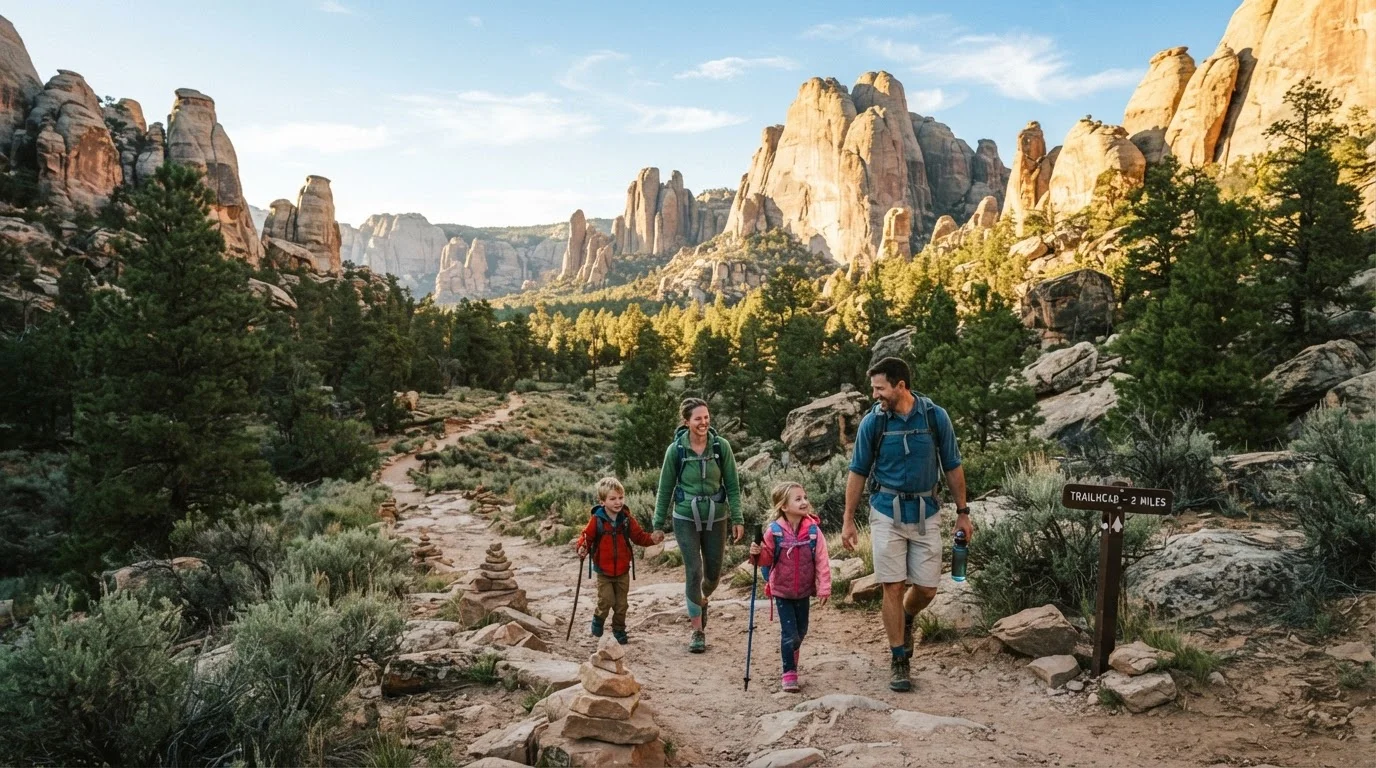
Photo: latesttrend.net editorial
Key Takeaways
- The America the Beautiful annual pass covers entry to over 2,000 federal sites and pays for itself quickly for families visiting multiple parks.
- Children under 15 enter all National Park Service sites free; the free pass never requires special enrollment.
- Peak-season crowds at popular parks can significantly affect your experience; shoulder-season visits often provide better conditions.
- Trail difficulty ratings vary widely by park; always check the specific park's website for current conditions before arrival.
- Campground and lodge reservations at high-demand parks often sell out months in advance, especially for summer dates.
- Accessibility varies considerably across parks; the NPS website lists detailed accessibility information for each site.
What national parks actually cost
Entry fees for most major national parks run between $15 and $35 per vehicle, covering all passengers. That price is valid for seven consecutive days at the specific park. For a family visiting more than two or three parks in a year, the America the Beautiful Annual Pass ($80 as of the most recent NPS pricing) covers entrance to over 2,000 federal recreation sites, including all NPS units, Bureau of Land Management sites, and US Forest Service areas.
Children under 15 always enter NPS sites free, which means a family of two adults and two kids pays no more per-person than the vehicle fee covers. Fourth-graders and their families also qualify for a free annual pass through the Every Kid Outdoors program, which is worth checking before you buy any pass.
Beyond entry, realistic costs include camping or lodging, food, gear, and fuel. A family car-camping trip inside a park can cost considerably less than a comparable hotel-based trip, though in-park lodge rates at places like Glacier or the Grand Canyon run as high as urban hotels. For budgeting context, see our road trip budgeting guide, which covers fuel, food, and lodging cost structures across different trip types.
If your family's park visit falls within the same school year as a fourth-grader's enrollment, apply for the Every Kid Outdoors pass before purchasing any paid entry. The pass covers the entire family for 12 months and is obtained at no cost through the program's official website.
Book campground reservations the moment the Recreation.gov window opens, typically at 10 a.m. Eastern exactly six months before your target date. Set a calendar reminder the day before so you are ready at the booking time.
Arrive at trailheads before 8 a.m. during summer visits to popular parks. Parking lots at iconic trails fill by mid-morning, and some parks have introduced shuttle-only access to reduce congestion.
Choosing the right park for your family
The NPS manages over 400 sites, and they vary enormously in character, difficulty, and infrastructure. A family with toddlers has different needs than one with teenagers. The most visited parks, including the Great Smoky Mountains, Olympic, and Acadia, have well-developed visitor facilities, paved interpretive trails, and ranger programs designed for younger children.
Parks with diverse terrain types give families more flexibility. Grand Teton has flat lakeside walks alongside serious alpine hikes; families can choose their challenge level each day. By contrast, some desert parks like Death Valley or Big Bend require more preparation because distances between facilities are long, temperatures can be extreme, and trail options are limited for young children.
The NPS website's park finder lets you filter by activity type, accessibility features, and amenities. Before committing to a destination, read recent trip reports on the park's official site and check whether the activities you want require advance permits (which is the case for some day hikes and backcountry zones). If you prefer staying in one place for several days rather than driving between multiple stops, destinations suited to slow travel may help you identify parks where a week feels like the right amount of time.
Seasonal conditions and timing
Timing affects both cost and experience at national parks more than almost any other variable. July and August are peak season at most parks in the continental US. Yosemite Valley, Zion Narrows, and Rocky Mountain's Trail Ridge Road all see heavy congestion during these months, and some parks require timed entry reservations that must be booked weeks in advance.
Shoulder seasons, generally May to early June and September to October, provide cooler temperatures at high-elevation parks, fewer crowds, and often lower prices for lodging near park boundaries. Spring wildflower displays in parks like Shenandoah and the Smokies are a genuine draw, not just a consolation prize for avoiding summer. Our timing guide for family travel goes deeper on how seasonal shifts affect overall trip costs.
Winter visits work well at some parks. Saguaro in Arizona, Big Bend in Texas, and Joshua Tree in California are more accessible and pleasant in winter than summer. By contrast, Glacier and Rocky Mountain lose most road access from November through May. Always verify current road and facility status on the park's official NPS page before finalizing dates.
Lodging and camping options inside parks
In-park accommodation falls into three categories: developed campgrounds, backcountry camping, and lodges. Developed campgrounds in popular parks like Yosemite or Grand Canyon fill up quickly; reservations open on Recreation.gov up to six months in advance for many sites, and peak-summer spots disappear within minutes of opening.
Campground fees typically range from $15 to $35 per night, which is substantially less than nearby private lodging. Many sites accommodate standard tent setups and car camping with a vehicle. First-come, first-served campgrounds exist at nearly every park but are unreliable during peak season.
Park lodges, operated by park concessionaires rather than the NPS directly, vary from basic cabins to full hotel-style rooms. Availability is similarly tight at peak times. Families who cannot secure in-park accommodation often stay in nearby gateway towns, which can be both more flexible and less expensive. Vacation rentals near park gateways are worth considering when traveling with multiple children, since kitchen access significantly reduces food costs over a multi-day visit.
Accessibility, safety, and what to prepare for
Accessibility across the national park system varies considerably. Many visitor centers and some paved trails meet ADA standards, but terrain constraints mean that a large share of trail mileage is not wheelchair accessible. The NPS maintains an accessibility section on each park's website that details which trails, facilities, and programs are fully accessible. Families traveling with members who have mobility considerations should consult these pages directly rather than assuming.
Safety preparation is practical rather than optional. Cell service is absent or unreliable in most park interiors. Download offline maps before arrival, carry more water than you expect to need (the NPS recommends at least half a liter per person per hour of hiking in dry or hot conditions), and know the location of the nearest ranger station. Children should carry a whistle and know to stay put if separated.
Wildlife encounters are possible at many parks. Bears are present in roughly half the NPS units in the continental US. Following food storage rules (bear canisters or food lockers) is required, not optional, at many of these parks. The park's official site always specifies current requirements.
For families weighing whether a domestic park trip fits their budget and logistics compared to other options, this comparison of domestic and international travel covers the real cost and logistics differences.
Making the most of your visit
Junior Ranger programs are available at nearly every NPS unit. Children complete age-appropriate activities in a booklet, then receive a badge from a ranger. These programs are free, give kids structured engagement with the park's natural and cultural history, and typically run in all seasons. Pick up the booklet at the visitor center on arrival.
Ranger-led programs, including nature walks, evening campfire talks, and geology demonstrations, are included in the entry fee. Schedules are posted at visitor centers and on each park's website. These programs are particularly useful for families who want guided interpretation without hiring a private guide.
Pack out everything you bring in, follow Leave No Trace principles, and stay on designated trails. Cutting switchbacks erodes slopes and damages vegetation in ways that take years to recover. Parks absorb millions of visitors each year; small individual choices add up to significant cumulative effects on trail conditions and wildlife habitat.
National parks fit naturally into frugal family living as a category: the infrastructure is already paid for by federal land management, entry costs are low relative to theme parks or resorts, and the experience depends on time and attention rather than additional spending.
The content provided on our blog site traverses numerous categories, offering readers valuable and practical information. Readers can use the editorial team’s research and data to gain more insights into their topics of interest. However, they are requested not to treat the articles as conclusive. The website team cannot be held responsible for differences in data or inaccuracies found across other platforms. Please also note that the site might also miss out on various schemes and offers available that the readers may find more beneficial than the ones we cover.