
Vacation Rental Homes for Families: Honest Pros and Cons

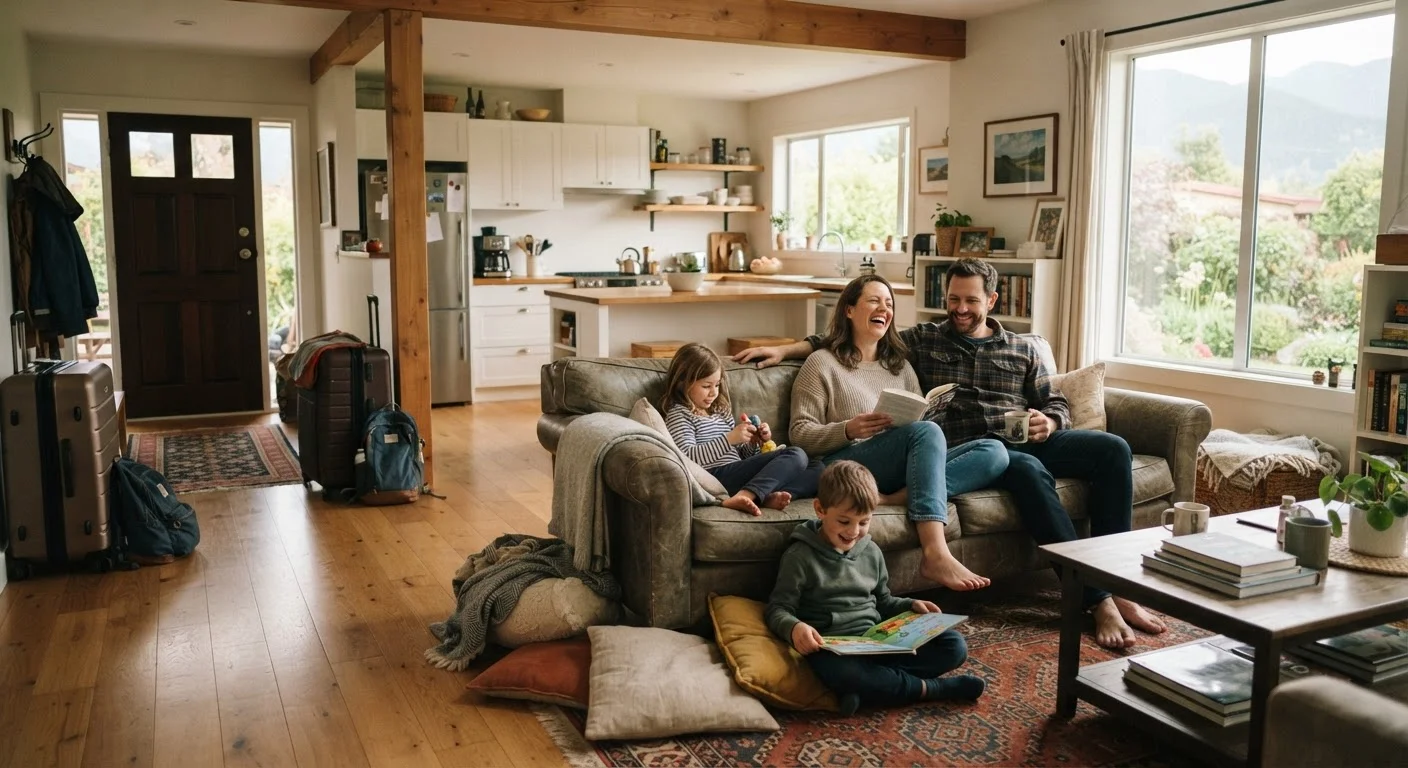
Photo: latesttrend.net editorial
Key Takeaways
- A kitchen in the rental can cut daily food costs significantly compared to eating out every meal.
- Cleaning fees, service charges, and security deposits can erode apparent savings over short stays.
- Space and privacy make rentals practical for families with young children or varied sleep schedules.
- Booking risks, inconsistent quality, and limited on-site support are genuine drawbacks to weigh.
- Off-peak timing and longer stays tend to improve the value math for rental properties.
Full kitchen cuts restaurant spending across the trip
Cooking breakfast and lunch in a rental kitchen can reduce daily food costs, particularly for large families. Even partial meal preparation at the unit changes the overall trip budget.
Separate bedrooms fit varied sleep schedules
Families with young children can put kids to bed without restricting adult activity. Different age groups can occupy different spaces without disrupting each other.
Per-person cost drops with larger groups
A three-bedroom rental shared by two families often costs less per person than two hotel rooms of comparable quality. The savings increase as group size grows.
More privacy than a standard hotel stay
No shared walls with strangers, no lobby noise, and no need to coordinate around hotel policies. Families can set their own pace and noise level.
Amenities like laundry reduce packing burden
In-unit washers and dryers mean families can pack fewer clothes and rewear items during longer trips, which reduces luggage costs and check-in friction.
Cleaning fees and service charges add up fast
A $200 cleaning fee on a two-night stay effectively adds $100 per night before taxes. Short stays often make rentals more expensive than they appear at the listed nightly rate.
Listing accuracy is not guaranteed
Photos can be flattering and descriptions vague. Properties marketed as family-friendly may have unfenced pools, fragile furniture, or layouts that do not suit traveling with children.
No on-site support when something goes wrong
If appliances fail or a safety issue arises, resolution depends entirely on host responsiveness and platform support. There is no front desk to call at midnight.
Security deposits and strict cancellation terms carry financial risk
Many rentals require a deposit that can be withheld for damage disputes. Non-refundable cancellation policies are common and leave families exposed if plans change.
Minimum stay requirements limit flexibility
Many properties require a minimum of three to seven nights, which does not suit short trips or spontaneous weekend travel. Peak season minimums are often longer.
Self-check-in and checkout logistics add friction
Keypad codes, lockbox instructions, and strict checkout times require coordination that hotel stays do not. Errors in communication with the host can mean arrival problems.
What you actually get with a vacation rental
A vacation rental is a privately owned home, condo, or apartment rented for a fixed period, usually through a booking platform. The main draw for families is physical space: separate bedrooms, a full kitchen, a living room where kids can decompress, and often outdoor space like a yard or patio. That setup is structurally different from a hotel room, where a family of five is stacked into a single space and eating out for every meal.
The practical effect is that daily routines stay closer to normal. Parents can put toddlers to bed at 7 p.m. while the older kids watch a movie in another room. Someone with dietary restrictions can cook their own food. Laundry facilities, when included, reduce the amount of clothing you need to pack. For families planning a national park visit, a rental near the park can serve as a real base rather than a staging area.
None of this means rentals are always the right call. The benefits depend heavily on how many people are traveling, how long you are staying, and how carefully you vet the listing before committing.
The real advantages
Full kitchen cuts restaurant spending across the trip
Cooking breakfast and lunch in a rental kitchen can reduce daily food costs, particularly for large families. Even partial meal preparation at the unit changes the overall trip budget.
Separate bedrooms fit varied sleep schedules
Families with young children can put kids to bed without restricting adult activity. Different age groups can occupy different spaces without disrupting each other.
Per-person cost drops with larger groups
A three-bedroom rental shared by two families often costs less per person than two hotel rooms of comparable quality. The savings increase as group size grows.
More privacy than a standard hotel stay
No shared walls with strangers, no lobby noise, and no need to coordinate around hotel policies. Families can set their own pace and noise level.
Amenities like laundry reduce packing burden
In-unit washers and dryers mean families can pack fewer clothes and rewear items during longer trips, which reduces luggage costs and check-in friction.
Kitchen access is consistently the most cited reason families choose rentals over hotels. Breakfast and lunch cooked in the unit can noticeably reduce daily spending, particularly for larger families. Even just covering two of three meals yourself changes the budget math. For context on how food costs compound across a trip, see our piece on why family travel budgets spiral.
Privacy also has practical value. Families are not sharing walls with strangers or adjusting to hotel noise policies. For parents with babies or light-sleeping kids, that separation matters more than square footage.
Per-night costs often look lower than comparable hotel rooms, especially when the rental is split across a larger group or extended family traveling together. A three-bedroom house shared by two families frequently costs less per person than two separate hotel rooms of the same quality tier.
The real drawbacks
Cleaning fees and service charges add up fast
A $200 cleaning fee on a two-night stay effectively adds $100 per night before taxes. Short stays often make rentals more expensive than they appear at the listed nightly rate.
Listing accuracy is not guaranteed
Photos can be flattering and descriptions vague. Properties marketed as family-friendly may have unfenced pools, fragile furniture, or layouts that do not suit traveling with children.
No on-site support when something goes wrong
If appliances fail or a safety issue arises, resolution depends entirely on host responsiveness and platform support. There is no front desk to call at midnight.
Security deposits and strict cancellation terms carry financial risk
Many rentals require a deposit that can be withheld for damage disputes. Non-refundable cancellation policies are common and leave families exposed if plans change.
Minimum stay requirements limit flexibility
Many properties require a minimum of three to seven nights, which does not suit short trips or spontaneous weekend travel. Peak season minimums are often longer.
Self-check-in and checkout logistics add friction
Keypad codes, lockbox instructions, and strict checkout times require coordination that hotel stays do not. Errors in communication with the host can mean arrival problems.
The fee structure is where rental economics get complicated. A listing priced at $150 per night may carry a $200 cleaning fee, a platform service charge, and local taxes. For a two-night stay, those additions can double the effective nightly cost. This is a pattern worth scrutinizing before assuming a rental is cheaper than a hotel. Our overview of what budget destination labels leave out covers related patterns in destination marketing.
Listing quality varies considerably. Photos may not match reality, and description accuracy is not guaranteed. A property described as "family-friendly" may have steep stairs, fragile decor, or a pool with no fence. Reading recent reviews carefully and contacting the host with specific questions before booking reduces this risk but does not eliminate it.
Unlike hotels, most rentals have no front desk, no daily housekeeping, and no one on-site if something breaks. If the air conditioning fails on arrival, resolution depends on the host's responsiveness and the platform's support process, which can be slow.
When the numbers actually work
The cost equation for rentals improves as stay length increases. A cleaning fee that looks steep for two nights becomes reasonable spread across seven. If you are planning a week-long stay, the per-night effective cost usually comes down to a level that competes with hotels.
How group size changes the calculation
Group size matters just as much as duration. Two parents traveling with one child may find a one-bedroom hotel suite simpler and cheaper. The same family joined by grandparents or another family with kids shifts the math considerably in the rental's favor.
Traveling outside peak seasons also changes what is available and at what price. Many rental owners offer lower nightly rates in shoulder season, and minimum-stay requirements are sometimes shorter. For families with schedule flexibility, that combination can make a rental both affordable and easier to book. If your trip involves driving to the destination, pairing a rental with smart road trip planning can extend the value further; see our guide to budget family road trips for specifics.
Booking smart to avoid common problems
The most common rental complaints follow predictable patterns: inaccurate listings, surprise fees, properties that do not match family needs. Most are avoidable with a consistent pre-booking process.
- Read the most recent reviews, not just the highest-rated ones. Look for comments about cleanliness, accuracy, and host communication.
- Add up the full checkout cost, including cleaning fee, service charge, and taxes, before comparing to hotel rates.
- Ask the host directly about anything that matters: crib availability, stair configuration, parking, neighborhood noise.
- Check the cancellation policy before paying. Policies range from fully flexible to non-refundable, and family plans change.
- Confirm what "sleeps 8" actually means. Sofa beds and air mattresses count toward that number on most platforms.
Families who treat the booking process as research rather than impulse purchasing tend to have fewer unpleasant surprises on arrival. The extra 30 minutes before committing is worth it.
The content provided on our blog site traverses numerous categories, offering readers valuable and practical information. Readers can use the editorial team’s research and data to gain more insights into their topics of interest. However, they are requested not to treat the articles as conclusive. The website team cannot be held responsible for differences in data or inaccuracies found across other platforms. Please also note that the site might also miss out on various schemes and offers available that the readers may find more beneficial than the ones we cover.