
Raising Kids Without Overspending: Separating Financial Myths from Reality

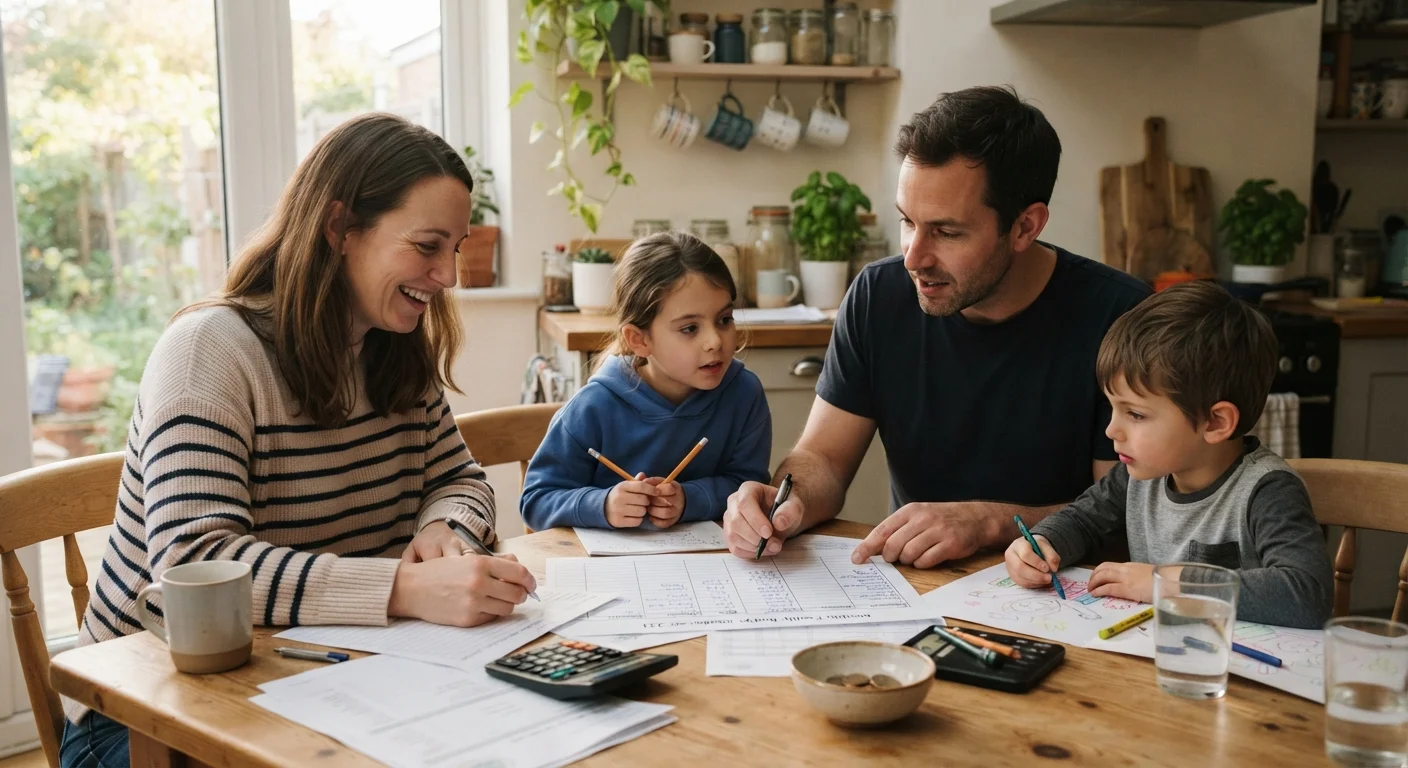
Photo: latesttrend.net editorial
Key Takeaways
- Most child development research does not link expensive gear or activities to better outcomes.
- Many high-cost parenting norms are driven by social pressure, not evidence.
- Second-hand items, free programs, and public resources cover most genuine childhood needs.
- Teaching children about money early costs nothing and pays off for decades.
- Overspending on kids often comes from fear of missing out, not actual child need.
Where the overspending starts
Most families do not set out to overspend on their children. Spending creep tends to start with a single purchase that seems non-negotiable: a travel system stroller, an infant monitor with a subscription app, a preschool program with a long waitlist. One decision builds on the next, and before long a family is spending at a level that feels permanent.
A lot of that spending is driven by genuine love and legitimate anxiety, not need. The challenge is separating the two. The myths below are among the most common financial traps parents fall into, and understanding what the evidence actually shows can make it easier to spend deliberately rather than reactively.
For a broader look at the daily patterns behind these habits, see how consistently frugal families manage their spending.
Common myths about what kids really need
Myth
Babies need specialized gear to develop properly, and cutting corners on equipment puts them at a disadvantage.
Fact
Child development research does not connect expensive baby gear to developmental outcomes. Most developmental milestones are supported by interaction with caregivers, not equipment.
The infant product market has grown substantially over the past two decades, and marketing language often borrows from developmental science without the evidence to back it up. Pediatric and developmental guidelines from organizations like the American Academy of Pediatrics focus on safe sleep environments, feeding, and responsive caregiving. None of those require premium price tags. A firm, flat, uncluttered sleep surface costs far less than a smart bassinet with monitoring features, and it meets the same safety standard.
Myth
Children who participate in more extracurricular activities gain a competitive advantage academically and socially.
Fact
Research on child well-being consistently finds that overscheduling is a risk, not a benefit. Unstructured play supports creativity, problem-solving, and social development.
The American Academy of Pediatrics has published guidance noting that free, unstructured play is important for healthy brain development. Children who have time to direct their own play build persistence and imagination in ways that scheduled activities do not replicate. Signing a child up for multiple paid programs per season is expensive and, according to the available evidence, no more beneficial than fewer or free alternatives when the child has adequate unstructured time alongside them.
Myth
Organic and premium food products give children a meaningfully better nutritional start than standard options.
Fact
For most families, the nutritional gap between organic and conventional produce is small. What matters most is variety, balance, and adequate intake of vegetables, protein, and whole grains.
The nutritional science here is nuanced. Organic farming reduces certain pesticide residues on produce, and some families prioritize that. However, the actual health impact for children eating conventional produce that meets regulatory safety standards is not well-established as harmful. Families on tight budgets who shift spending from organic to simply more fruits and vegetables, regardless of label, are likely to see a clearer benefit. Frozen vegetables are nutritionally comparable to fresh and are often cheaper.
Myth
Private preschool or expensive early education programs produce lasting academic advantages over public or lower-cost alternatives.
Fact
Long-term studies on early education show that the quality of a program matters more than its price, and high-quality, publicly funded options exist in most areas.
Decades of research, including long-running studies on publicly funded Head Start programs, show that early childhood education can support school readiness. However, the evidence that expensive private preschools produce outcomes that are substantially better than quality public programs is limited. What the research does support consistently is the importance of language-rich environments and responsive adult interaction, both of which are free. Families can ask local school districts and community organizations about subsidized or free pre-K options before assuming a private program is necessary.
Myth
Buying new, branded children's clothing and shoes protects their health and development better than second-hand or store-brand options.
Fact
Children's foot and physical development are not harmed by properly fitting second-hand or store-brand footwear. Fit matters; brand does not.
Pediatric podiatry guidance focuses on fit, flexibility, and appropriate sole support, not brand or price. A second-hand shoe in good condition that fits well is functionally equivalent to a new branded shoe for a child whose foot is growing and will change size in a matter of months. Clothing, similarly, has no developmental requirement. Budget and resale options work identically to premium alternatives for the actual purpose of keeping a child warm, covered, and mobile.
The pattern across these myths is consistent: spending more rarely produces the outcome parents are hoping for, and in many cases the less expensive path works just as well or better.
This applies to education spending too. Before the school year, many families can cut significantly by auditing what they already own. The back-to-school spending audit checklist walks through that process step by step.
What you can do instead
Redirecting money away from low-value spending does not require deprivation. Public libraries, community recreation centers, and free municipal programs provide access to books, sports, art, and social activities at no cost or very low cost. Many school districts and nonprofits offer subsidized extracurriculars for families who ask.
Second-hand children's gear is widely available and, for most categories, just as safe as new when checked against current recall databases. Children's clothing, toys, books, and sports equipment turn over quickly in the resale market because kids outgrow them fast.
One of the highest-return investments a family can make is teaching children about money from an early age. Children who understand budgeting and delayed gratification tend to make better financial decisions as adults, and the conversations cost nothing.
Travel is another area where families often overspend without realizing it. The patterns that push family travel budgets higher are well-documented and largely avoidable with a little planning.
Check recalled items before buying second-hand
The content provided on our blog site traverses numerous categories, offering readers valuable and practical information. Readers can use the editorial team’s research and data to gain more insights into their topics of interest. However, they are requested not to treat the articles as conclusive. The website team cannot be held responsible for differences in data or inaccuracies found across other platforms. Please also note that the site might also miss out on various schemes and offers available that the readers may find more beneficial than the ones we cover.