
The Hidden Costs of Cheap Smart Home Devices

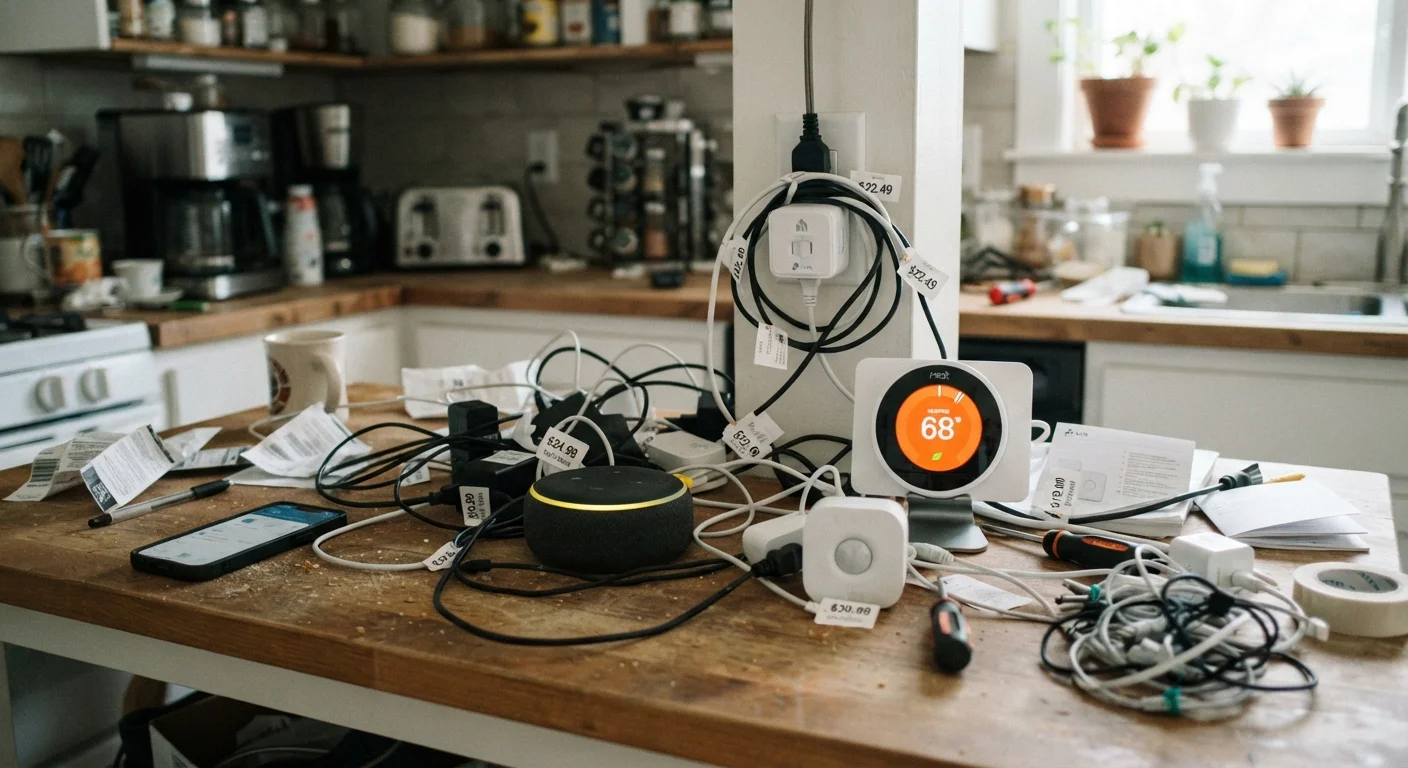
Photo: latesttrend.net editorial
Key Takeaways
- Many cheap smart home devices require paid subscriptions to unlock basic features after purchase.
- Incompatible ecosystems force families to buy redundant hubs or replace devices entirely.
- Short software support windows can leave devices insecure or nonfunctional within a few years.
- Privacy data practices vary widely and are rarely explained clearly on the packaging.
- Total cost of ownership, not sticker price, is the right number to compare when shopping.
Why the sticker price is just the starting point
A $25 smart plug or a $40 indoor camera looks like a bargain next to a $150 name-brand alternative. The gap narrows fast once you factor in what happens after unboxing. Subscription fees, replacement costs, and compatibility purchases can push the real price well above what the premium version would have cost from the start.
This pattern shows up across the smart home category. Families who track their spending often find that a handful of low-cost connected devices added $15 to $30 per month in recurring charges within a year of purchase. That math matters, and understanding how recurring charges stack up is a useful exercise before adding any new device to your network.
The mistakes below are common, avoidable, and worth knowing before you buy.
Buying a device without checking whether it requires a paid subscription for core features.
Assuming all smart home devices work together because they all connect to Wi-Fi.
Ignoring how long the manufacturer commits to providing software and security updates.
Overlooking the data privacy practices of a device before connecting it to your home network.
Purchasing several devices from different budget brands without a plan for how they will be managed.
The compatibility problem nobody warns you about
Smart home devices communicate using protocols such as Wi-Fi, Zigbee, Z-Wave, and the newer Matter standard. A device that uses a different protocol than the others in your home may require its own dedicated hub, which adds cost and creates another app to manage. Families who buy devices from several different low-cost brands often end up with three or four separate apps and two or three hubs, none of which talk to each other cleanly.
The Matter standard, developed by a consortium of manufacturers, is designed to reduce this problem by letting devices from different brands work through a single controller. However, not all budget devices support it, and older hardware rarely receives retroactive compatibility updates. Checking the protocol and ecosystem requirements before purchase takes a few minutes and can prevent a much more expensive fix later. Understanding how your home network operates also helps, since some smart devices perform poorly on congested or limited Wi-Fi bands.
Unsupported devices can become a security risk
How to think about total cost before buying
A practical way to evaluate any smart home device is to estimate the 24-month cost: sticker price, plus any hub required, plus the monthly subscription fee multiplied by 24, plus any cloud storage fee if applicable. For a $40 camera that requires a $5-per-month cloud plan, that number is $160 over two years before you account for a possible hub. A $100 camera with local storage and no subscription fee costs less over the same period.
This same logic applies to convenience spending in other categories. Weighing the real dollar cost of time-saving shortcuts is a habit that translates directly to smarter tech purchases.
Reading warranty and support terms is equally worth the time. Manufacturers sometimes discontinue cloud services for older device lines, leaving hardware that depends entirely on those servers unable to function. What protection plans actually cover varies more than most buyers expect, and smart home devices are often excluded from standard coverage because they rely on third-party services.
40%+
Smart home devices requiring a paid cloud service
Consumer electronics analysts have estimated that a large share of connected home cameras and doorbells restrict core features, such as recorded video history, to paid subscription tiers.
2-3 years
Typical software support window for budget devices
Industry observers note that many lower-cost smart home devices receive firmware and security updates for two to three years before support is quietly discontinued.
The content provided on our blog site traverses numerous categories, offering readers valuable and practical information. Readers can use the editorial team’s research and data to gain more insights into their topics of interest. However, they are requested not to treat the articles as conclusive. The website team cannot be held responsible for differences in data or inaccuracies found across other platforms. Please also note that the site might also miss out on various schemes and offers available that the readers may find more beneficial than the ones we cover.