
Low-Cost Landscaping Approaches That Actually Reduce Yard Work Over Time

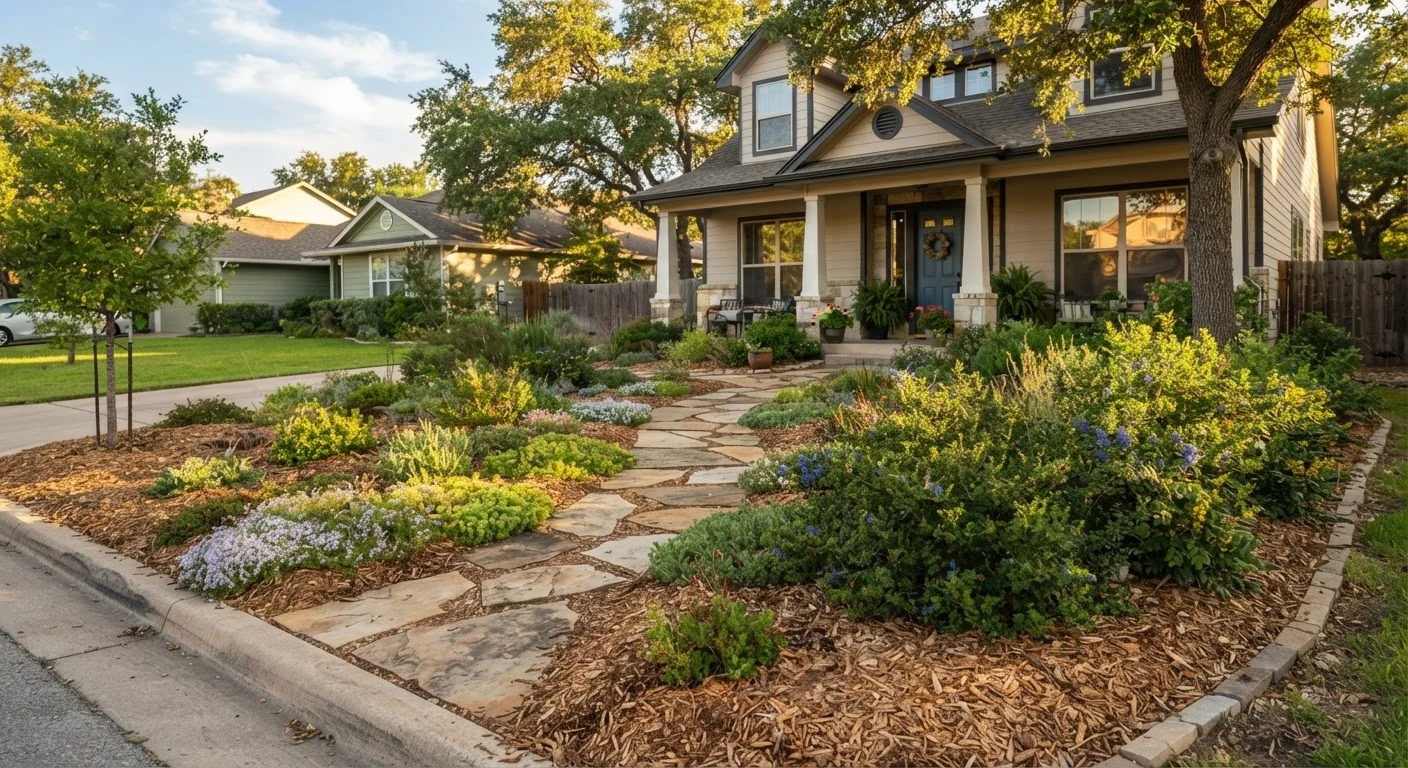
Photo: latesttrend.net editorial
Key Takeaways
- Replacing high-maintenance turf with ground cover plants can eliminate weekly mowing on large sections of your yard.
- A 3-inch layer of wood chip mulch suppresses weeds, retains moisture, and cuts watering frequency significantly.
- Native and drought-tolerant plants typically require less water, fewer fertilizer applications, and almost no pest control.
- Simple regrading to direct runoff away from beds reduces erosion, standing water, and replanting costs over time.
- Grouping plants by water needs lets you water efficiently and avoid overwatering, which is a common source of plant loss.
Why the cheapest yard is often the one you barely have to touch
Most families spend money on lawn care in two ways: the obvious costs like mowing services or fertilizer bags, and the less obvious cost of time. Hours spent watering, weeding, edging, and reseeding add up fast, and paying someone else to do it adds up faster. The good news is that a yard designed around low maintenance costs less to run every season without looking neglected.
The approaches below focus on changes you can make gradually, spending modestly now to avoid larger recurring bills. Some will pay back in reduced water use. Others eliminate tasks entirely. For a broader look at how small upfront habits prevent larger repair bills, see preventive maintenance strategies that apply across your whole home.
Switch high-traffic turf areas to ground cover
Grass in narrow side yards, shaded areas under trees, or steep slopes fights a losing battle. It grows unevenly, dies back in drought, and still needs mowing. Ground cover plants like creeping thyme, clover, or low-growing sedges fill the same space with far less upkeep. Once established, most require no mowing and minimal watering.
The upfront cost is the plant material and any prep work to remove existing grass. After that, annual maintenance is typically limited to pulling stray weeds along the edges until the ground cover is dense enough to crowd them out on its own.
Ground cover plants eliminate mowing entirely in the sections where they replace grass.
Mulch generously and refresh annually
Wood chip mulch at 3 inches deep does several things at once. It blocks most weed germination, which is the most time-consuming outdoor chore for most homeowners. It also holds soil moisture so plants need watering less often, and it breaks down slowly to feed the soil.
Many municipalities offer free or low-cost wood chips through tree-trimming programs. Checking with your local public works department or a service like a community chip drop program can cut this cost significantly. Refreshing the layer once a year keeps coverage effective and prevents bare soil from reappearing.
Three inches of wood chip mulch blocks most weed growth and cuts watering frequency at the same time.
Plant natives and drought-tolerant species
Plants native to your region evolved alongside local rainfall patterns, soil types, and temperature swings. Once they establish their root systems, typically after one to two growing seasons, they generally need no supplemental watering during normal weather. They also attract local pollinators without requiring pesticide applications.
Drought-tolerant plants from similar climates work on the same principle. The key is matching plants to your specific conditions: sun exposure, soil drainage, and average annual rainfall. A county extension office can provide free planting guides specific to your area, which removes the guesswork and reduces the chance of losing plants and having to replant.
Native plants typically need no watering after their first or second growing season in the ground.
Group plants by water need
When plants with very different water requirements sit next to each other, you end up overwatering some to keep others alive. Overwatered plants are more susceptible to root rot and fungal problems, which means replacement costs and extra treatments. Grouping plants by water need, a practice sometimes called hydrozoning, lets you water each section at its actual required frequency.
This matters most for anyone running drip irrigation or soaker hoses. Efficient watering zones also reduce the total water used outdoors, which affects utility bills directly. Outdoor water use is often one of the largest line items on a summer water bill.
Grouping plants by water need prevents overwatering and cuts the plant replacement costs that come with root rot.
Regrade problem areas to control runoff
Low spots that collect standing water after rain create conditions where grass dies, soil compacts, and mosquitoes breed. Repeatedly reseeding or resodding these areas costs money without fixing the underlying problem. Basic regrading, moving soil so water flows away from the problem zone, addresses the cause directly.
For minor grading work on small areas, a homeowner with a rented plate compactor and some topsoil can handle it. Anything involving significant soil movement near a foundation, a retaining wall, or a neighbor's property line should be handled by a licensed grading contractor. Permits may be required depending on the scope and your local municipality, so checking with your local building department before starting is worthwhile.
Fixing drainage at the source stops the cycle of reseeding dead patches and buying soil amendments every spring.
Use edging to define beds and reduce border maintenance
Grass creeps into garden beds along undefined borders, and pulling it out by hand is one of the most repetitive yard tasks there is. Installing a physical edging barrier, whether metal, recycled rubber, or concrete, creates a clear separation that stops lateral grass spread. It also gives a mower wheel a consistent path to follow, which means less hand-trimming after each mow.
The cost of edging material is a one-time expense that pays back quickly in reduced time and, for anyone using a lawn service, reduced labor charges. Bed borders that hold their shape also look tidier without extra effort, which is relevant if curb appeal matters to you.
A physical edging barrier stops grass from creeping into beds and cuts post-mow trimming to almost nothing.
Putting it together on a real budget
None of these approaches require doing everything at once. A practical path is to tackle one section of the yard per season, starting with the area that currently demands the most time. Replace the thirstiest, most labor-intensive patch first, then move outward. Sourcing plants from neighborhood swaps, local native plant sales, or end-of-season nursery markdowns keeps costs low.
For more ways to cut ongoing household spending without sacrificing quality, the Frugal Family Living hub covers habits that stretch a household budget across many categories. And if reducing your outdoor water bill is a priority, smart water use strategies can help you decide where the real savings are.
Start with your highest-maintenance spot
The content provided on our blog site traverses numerous categories, offering readers valuable and practical information. Readers can use the editorial team’s research and data to gain more insights into their topics of interest. However, they are requested not to treat the articles as conclusive. The website team cannot be held responsible for differences in data or inaccuracies found across other platforms. Please also note that the site might also miss out on various schemes and offers available that the readers may find more beneficial than the ones we cover.