
Community Recreation Centers: An Underused Fitness Resource for Families

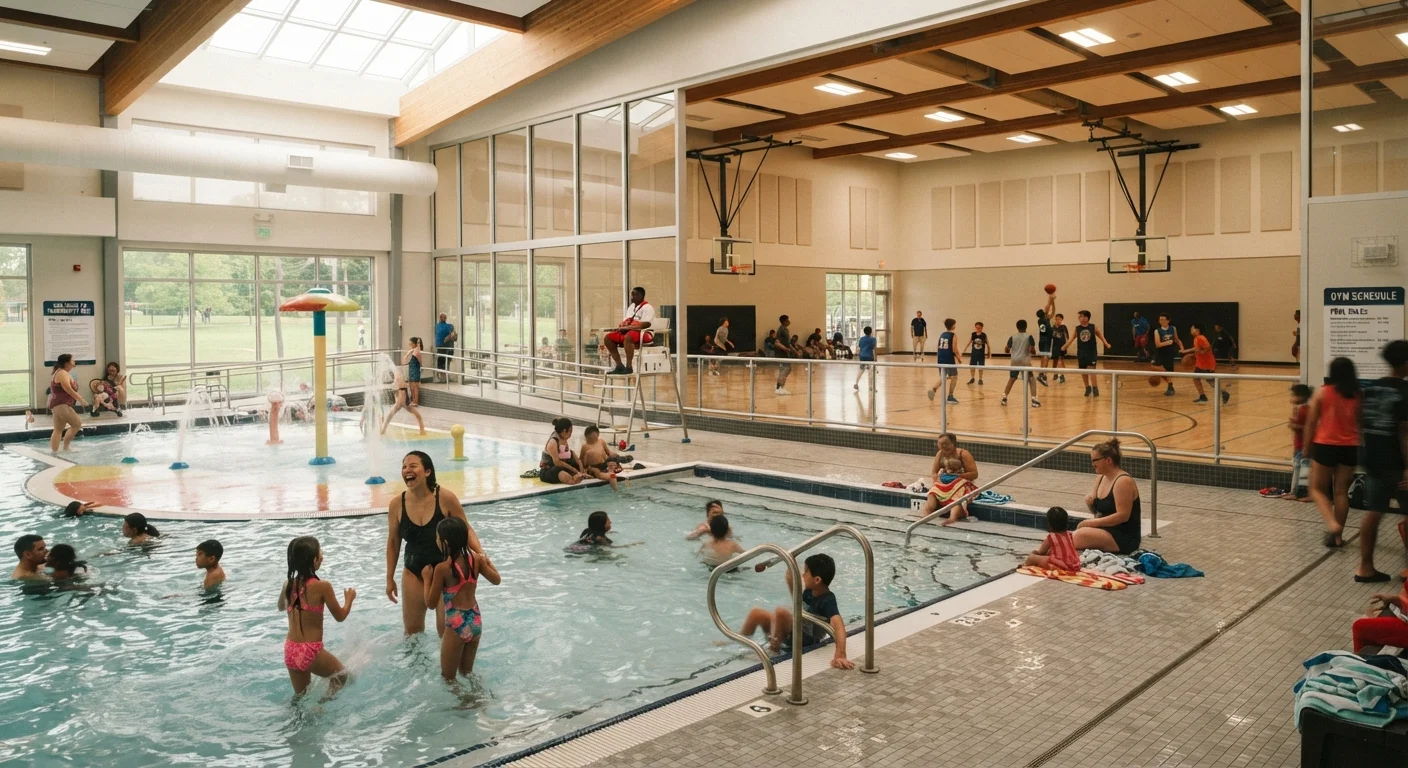
Photo: latesttrend.net editorial
What community recreation centers actually provide
Public recreation centers, often run by city parks and recreation departments or local park districts, are a category of facility that many families walk past without ever signing up. That is a real missed opportunity.
A typical mid-size recreation center includes an indoor swimming pool, gymnasium, weight room, group fitness studio, and outdoor athletic fields. Many also have dedicated spaces for youth programs, senior activities, and drop-in sports like pickleball or basketball. Some larger facilities have indoor tracks, racquetball courts, and climbing walls.
The programming side matters as much as the equipment. Swim lessons, youth basketball leagues, after-school fitness programs, and adult yoga classes are standard at many centers. These programs are funded through municipal budgets and membership fees, which is why pricing is structured to be accessible rather than profitable.
For a comparison of what this means financially relative to commercial gyms, see how rec center costs stack up against gym memberships.
How pricing and access typically work
Fees vary by municipality, but the general structure is consistent. Most centers charge a daily drop-in rate, a monthly membership, or an annual membership. Household or family memberships are almost always available and are typically the best value for families with more than one person using the facility.
Many centers apply income-based fee reductions, scholarship programs, or sliding-scale pricing. If cost is a genuine barrier, it is worth calling the facility directly and asking about financial assistance options before assuming the price listed is final. Parks and recreation departments are required by most municipal charters to serve the whole community, and many have discretionary funds specifically for this purpose.
Proof of residency sometimes unlocks a lower resident rate. Bringing a utility bill or a government-issued ID showing your address to the first visit can save money on enrollment.
Some centers are also free to enter for specific uses. Outdoor courts, walking tracks, and open gym times are frequently available at no cost during certain hours. Checking the facility's schedule before a first visit will clarify what requires a membership and what does not.
Families who want to avoid recurring fees altogether can also look at everyday spaces that work as workout venues.
Programs worth knowing about for families with children
Youth programming at recreation centers is often the most cost-effective part of what these facilities offer. Swim lessons at a municipal pool typically cost less per session than private swim schools. Youth sports leagues organized through parks and recreation are almost always priced below private club leagues, with equipment loans available in many cases.
Parks and recreation department
A local government agency that manages public parks, recreational facilities, and community programs. It is funded through municipal budgets and tasked with providing accessible leisure and fitness services to residents.
Drop-in rate
A per-visit fee paid without a membership. It allows occasional use of a facility but is typically more expensive per visit than a monthly or annual membership.
Household membership
A single membership that covers all members of one household, usually defined by a shared address. It is almost always cheaper per person than multiple individual memberships.
Sliding-scale pricing
A fee structure where the cost is adjusted based on a household's income or financial need. Many public recreation departments use this model to keep services accessible.
Open Doors
The YMCA's financial assistance program that reduces or waives membership fees for qualifying individuals and families. Availability and eligibility criteria vary by participating YMCA location.
After-school programs deserve particular attention. Many recreation centers partner with school districts to run subsidized or free after-school fitness and recreation programs for children from lower-income households. These are not widely advertised, and a direct call to the center or the city's parks and recreation department is the fastest way to find out what is available locally.
Teen programs are another underused category. Drop-in gym access, fitness orientations, and organized sports for teenagers are standard at many centers, and the social component can help build consistent habits in a way that home workouts cannot replicate.
If fitting these programs into a busy day is the main challenge, the strategies in staying active when schedules are packed apply equally to recreation center use.
Finding and evaluating your local options
Searching " parks and recreation" will usually return the official department website, which lists facilities, schedules, and fees. If your municipality uses a registration platform (many use software like ActiveNet or RecDesk), you can browse program offerings and pricing without visiting in person.
When visiting a center for the first time, ask for a tour and a current program guide. Staff can walk you through what is included in a membership versus what costs extra. Classes with additional fees are common for specialty programs like pottery or dance, while general fitness classes are usually covered under a standard membership.
Families who live in rural areas or smaller towns may have fewer options, but county-level facilities and YMCA locations (which operate separately from municipal recreation centers but follow a similar sliding-scale pricing model) often serve those gaps. The YMCA's financial assistance program is formally called Open Doors and is available at participating locations.
For families who decide a recreation center is not the right fit, building a fitness routine without any gym is a practical alternative, and common fitness myths that lead to unnecessary spending can help avoid expensive detours along the way.
The content provided on our blog site traverses numerous categories, offering readers valuable and practical information. Readers can use the editorial team’s research and data to gain more insights into their topics of interest. However, they are requested not to treat the articles as conclusive. The website team cannot be held responsible for differences in data or inaccuracies found across other platforms. Please also note that the site might also miss out on various schemes and offers available that the readers may find more beneficial than the ones we cover.